


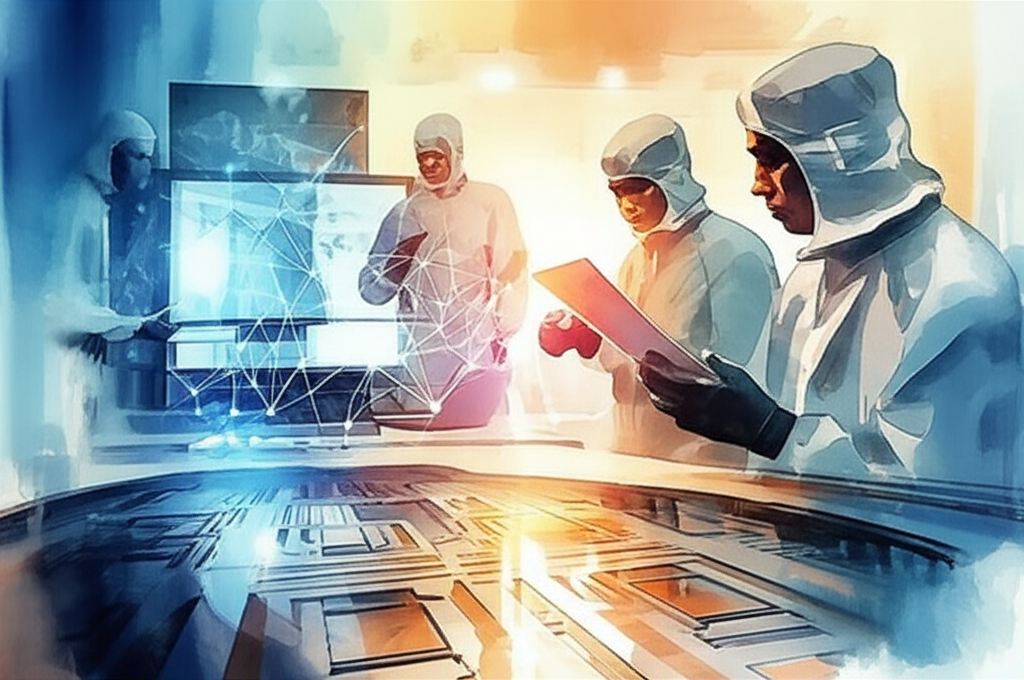
In a definitive shift away from traditional computing architectures, technology titans IBM and Intel have solidified their dominance in the rapidly expanding field of neuromorphic computing. As of early 2026, the two industry leaders are spearheading a hardware revolution that moves beyond the decades-old von Neumann model, aiming to replicate the human brain's energy efficiency and parallel processing capabilities. This strategic convergence comes as the global demand for sustainable Artificial Intelligence (AI) solutions intensifies, with new market data projecting the sector to reach nearly $9 billion by the next decade.
The collaboration, characterized by parallel innovation and joint participation in high-level industrial consortiums like the European-led NeurONN project, represents a critical pivot for the semiconductor industry. Facing the unsustainable energy costs of training massive Large Language Models (LLMs) in centralized data centers, the industry is looking to the "edge"-devices like autonomous vehicles, robotics, and medical sensors. By integrating IBM's brain-inspired algorithms with next-generation hardware architectures similar to Intel's Loihi, the sector is poised to deliver intelligence that operates on microwatts rather than megawatts.

The End of the Von Neumann Era
For over seventy years, the von Neumann architecture-where memory and processing are separated, requiring constant data transfer-has been the bedrock of computing. However, this design has created a notorious "bottleneck," resulting in latency and excessive power consumption, particularly for modern AI workloads. Neuromorphic computing dissolves this boundary by integrating memory and computation within the same physical array, mirroring the distributed synaptic structure of the biological brain.
According to reports from October 2025, this transition has moved rapidly from academic curiosity to commercial viability. Leading the charge, IBM and Intel have developed chips that utilize event-driven computing and spiking neural networks (SNNs). These systems only process information when a change occurs, rather than continuously running cycles, leading to drastic efficiency gains. This architectural shift is not merely an incremental upgrade but a foundational redesign of how machines "think."
Strategic Convergence and Market Dynamics
The market implications of this technological leap are profound. Data released in late 2025 indicates that the global neuromorphic computing market is on an explosive trajectory. A report from OpenPR dated December 31, 2025, projects the market to reach US$ 8.76 billion by 2033, growing at a Compound Annual Growth Rate (CAGR) of 30.4%. Another analysis frames the high-speed chip segment specifically reaching US$ 8.0 billion by 2031. This growth is being primarily driven by the leadership of Intel and IBM, who collectively hold the lion's share of North America's 38% market contribution.
"Intel, IBM, and Qualcomm are quietly betting billions to make AI think like you," noted industry observer Ashish Sharda in mid-2025, highlighting the scale of investment flowing into these "quiet" revolutions.
While the two giants have historically been competitors, their recent activities suggest a functional duopoly in establishing standards for this new computing paradigm. Both companies serve on the Industrial Advisory Board of the NeurONN project, a European initiative exploring energy-efficient architectures. Furthermore, IBM Research Europe - Zurich has been instrumental in exploring these paradigms alongside Intel-backed communities, fostering an ecosystem where proprietary breakthroughs drive collective industry advancement.
Hardware Milestones: Loihi and NorthPole
The partnership narrative is underpinned by specific hardware milestones achieved throughout 2025. Intel continues to push the envelope with its Loihi processors and the recently launched Hala Point system, which facilitates large-scale neuromorphic research. Intel's approach utilizes asynchronous artificial neural networks to enable efficient on-chip learning, a critical feature for devices that must adapt to their environment without connecting to the cloud.
Simultaneously, IBM has advanced its NorthPole architecture, the successor to its pioneering TrueNorth chip. Designed for inference at the edge, NorthPole eliminates the need for external memory access, allowing for faster and more energy-efficient processing of complex AI tasks. This capability was highlighted in October 2025 reports noting IBM's focus on "highly efficient AI inference engines that push the boundaries of performance per watt." The synergy between Intel's scalable systems and IBM's precision inference chips creates a comprehensive hardware stack that addresses both research and commercial deployment needs.
Implications for Edge Intelligence and Sustainability
The defining promise of the IBM-Intel neuromorphic push is the democratization of intelligence at the edge. Traditional AI models are power-hungry, often requiring the immense resources of hyperscale data centers. Neuromorphic chips, by contrast, function effectively on the limited power budgets of battery-operated devices.
This efficiency unlocks transformative applications in sectors ranging from healthcare to smart cities. For instance, neuromorphic processors can power smart prosthetics that adapt to a user's movements in real-time, or autonomous drones that navigate complex environments without GPS or cloud connectivity. The ability to process data locally also enhances privacy and security, as sensitive information does not need to be transmitted to a central server.
A Sustainable Path Forward
Beyond functionality, the environmental argument for neuromorphic computing is becoming increasingly decisive. With global AI energy consumption soaring, regulatory bodies and corporations are under pressure to find greener alternatives. Neuromorphic architectures offer a path to "sustainable AI," potentially reducing power consumption by orders of magnitude. This aligns with broader corporate strategies; IBM, for example, has integrated these advancements into its Granite family of models and enterprise offerings, signaling that sustainability is now a core component of AI value propositions.
Outlook: The Road to 2033
As we move deeper into 2026, the trajectory for neuromorphic computing is clear. The technology is transitioning from the laboratory to the factory floor. Advancements in materials science, such as the use of memristors and phase-change memory, are expected to further enhance the density and efficiency of these chips. Companies like Everspin are scheduled to demonstrate production-ready neural accelerators this year, marking another milestone in the ecosystem's maturity.
For IBM and Intel, the challenge remains in cultivating a robust software ecosystem that allows developers to easily program these novel architectures. While hardware has leaped forward, the software tools required to exploit spiking neural networks are still evolving. However, with their combined resources and strategic focus on collaborative platforms like the Intel Neuromorphic Research Community, the two giants are well-positioned to define the next era of computing-one where the machine not only calculates but truly perceives.


