
I remember a client a few years ago, a rapidly growing e-commerce platform. They were struggling with a critical bottleneck: their recommendation engine, built by a brilliant, albeit traditional, development team, was underperforming. Despite countless hours and iterative improvements, it couldn't adapt to user behavior fast enough. Sales were plateauing, customer engagement was dipping, and the frustration was palpable. This wasn't a failure of skill, but a misapplication of resources. They were trying to fit a square peg into a round hole, using conventional methods to solve a fundamentally AI-driven problem.
This experience wasn't isolated. Across the industry, I've witnessed similar scenarios where businesses, striving for innovation and competitive advantage, find their traditional development teams hitting a ceiling when it comes to complex AI-powered solutions. The realization that dawned on me then, and which I've seen validated time and again, is that the landscape of software development has irrevocably shifted. It's no longer about just building functional software; it's about building intelligent, adaptive, and predictive systems. This is why modern businesses desperately need AI Engineers, AI Developers, and dedicated AI teams instead of relying solely on traditional development teams.
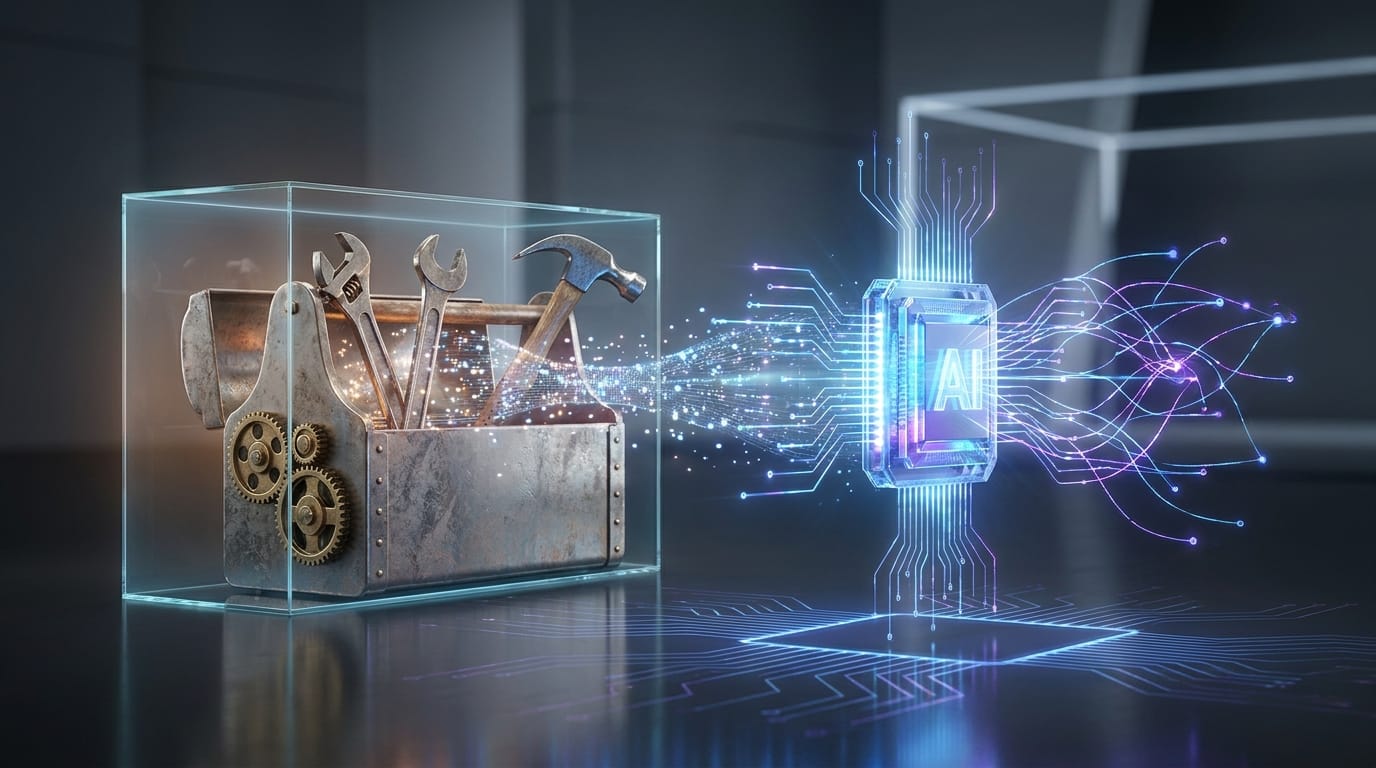
Debunking the Myth: Traditional Teams Can Adapt
There's a prevailing misconception that traditional development teams, with their robust understanding of software architecture and agile methodologies, can simply pivot to AI. While adaptability is a hallmark of good developers, it's crucial to differentiate between incremental improvements and specialized, cutting-edge AI development. Traditional teams often excel at building stable, well-defined applications. However, the complexities of machine learning, deep learning, natural language processing, and computer vision require a distinct skillset and mindset. These are not just advanced programming concepts; they are entirely new disciplines.
The first myth is that "more developers equal better AI." This overlooks the specialized knowledge required. An AI engineer understands model training, hyperparameter tuning, feature engineering, and the nuances of algorithms like neural networks. A traditional developer might be adept at API integration or database management, but lacks the foundational understanding of how to build and optimize AI models from scratch. The second myth is that AI can be "bolted on" to existing traditional systems. While integration is possible, truly leveraging AI often requires re-architecting systems to be data-centric and capable of continuous learning, which is beyond the scope of a typical traditional development project.
The third myth is that off-the-shelf AI tools are a substitute for expertise. While tools like OpenAI's GPT models or Google's Gemini are powerful, deploying them effectively for specific business needs, customizing them, and ensuring ethical and robust implementation still requires skilled AI developers. Simply using an API doesn't make a business AI-native; it makes them a consumer of AI services, which has its own limitations.
The True Principles Driving AI-Powered Engineering
The shift India is making, from being a powerhouse of conventional IT services to a leader in AI-powered engineering, is a testament to recognizing these fundamental differences. At IndiaNIC, we've seen this evolution firsthand. It's driven by a new set of principles that prioritize intelligence, adaptability, and predictive capabilities. This isn't just about faster delivery; it's about delivering superior software quality that learns and evolves.
The core of this new approach lies in embracing AI as a foundational element, not an add-on. This means leveraging cutting-edge tools and techniques that were unimaginable a decade ago. We're talking about the power of models like Claude Code and OpenAI Codex for generating boilerplate code, accelerating development cycles. Gemini and Grok are pushing the boundaries of generative AI for content creation, data analysis, and even debugging. Tools like OpenRouter allow us to seamlessly integrate and experiment with various AI models, finding the best fit for a given problem. This isn't just about efficiency; it's about unlocking novel solutions.
Furthermore, the rise of AI agents and sophisticated automation is transforming workflows. AI agents can perform complex tasks autonomously, from market research to customer support, freeing up human developers for higher-level strategic thinking. This automation, when combined with human oversight, creates a powerful synergy. It ensures that while AI drives speed and efficiency, human expertise guarantees accuracy, ethical considerations, and strategic alignment. This blend is critical for true AI product development and robust AI software development.
The Actionable Sequence: Building Your AI Advantage
For businesses looking to harness the power of AI, the transition requires a structured approach. It's not about discarding traditional development but about augmenting and strategically integrating AI capabilities. This involves several key steps:
- Strategic AI Assessment: Understand where AI can provide the most significant business value. This involves identifying pain points, opportunities for automation, and areas where predictive capabilities can drive growth. Is it for enterprise AI solutions, AI SaaS development, or enhancing existing products?
- Building Dedicated AI Teams: This is paramount. You need to hire AI engineers and AI developers who possess specialized skills. These teams should understand data science, machine learning algorithms, statistical modeling, and the specific AI frameworks relevant to your industry.
- Leveraging AI Development Tools: Equip your teams with the latest AI development platforms and tools. This includes cloud-based AI services from providers like AWS, Azure, and Google Cloud, as well as specialized AI development environments. Utilizing tools like Claude Code or OpenAI Codex can dramatically speed up the initial development phase.
- Integrating AI with Existing Systems: Plan for seamless integration. This might involve developing new APIs or re-architecting existing databases to handle the data requirements of AI models. The goal is to create a symbiotic relationship between your legacy systems and new AI functionalities.
- Prioritizing Data Governance and Ethics: AI is data-hungry. Establish robust data governance policies and ensure ethical considerations are at the forefront. This includes data privacy, bias mitigation in AI models, and transparency in AI decision-making.
- Iterative Development and Continuous Learning: AI models are not static. Implement a cycle of continuous monitoring, retraining, and optimization. AI SaaS development, in particular, benefits immensely from this agile, learning-centric approach, ensuring the product remains relevant and effective.
An Expert Perspective: The IndiaNIC Advantage
As the Director of Global Sales at IndiaNIC, I've observed the global IT landscape evolve for over two decades. The journey from basic web development to sophisticated AI-powered solutions is not just a trend; it's the future. Companies that embrace this shift proactively will undoubtedly lead their respective markets.
The power of dedicated AI teams cannot be overstated. They bring a depth of knowledge that a generalist development team simply cannot match. When you hire AI engineers and AI developers, you're investing in specialists who understand the intricacies of building intelligent systems. This specialized focus is what allows for true AI product development - creating solutions that are not just functional, but are predictive, adaptive, and capable of driving significant business outcomes.
Consider the rapid advancements in AI SaaS development. Businesses are no longer just buying software; they are subscribing to intelligent services that continuously improve. This is only possible with dedicated AI expertise. We see businesses leveraging AI for everything from hyper-personalization of customer experiences to optimizing complex supply chains and enabling sophisticated predictive maintenance in manufacturing. These are not simple software projects; they are complex AI software development initiatives.
The ability to build scalable enterprise AI solutions is becoming a defining characteristic of market leaders. Traditional development can build scalable applications, but AI brings a layer of intelligence that optimizes that scalability. For instance, an AI-powered customer service platform can scale to handle millions of queries by intelligently routing, summarizing, and even resolving issues autonomously, significantly reducing operational costs and improving customer satisfaction. This is the promise of AI automation, realized through dedicated AI development companies like IndiaNIC.
India's transition is fascinating. We're seeing a paradigm shift from offering commoditized IT services to providing high-value AI engineering. This is fueled by a vast talent pool, a growing ecosystem of AI startups, and a government focus on technological advancement. Companies that partner with an experienced AI development company can tap into this rich resource, accelerating their innovation and gaining a competitive edge.
The future of business is intertwined with artificial intelligence. It's not a question of 'if' but 'when' and 'how' organizations will integrate AI to remain competitive. Those who resist will find themselves outmaneuvered by those who embrace it.
The Data Behind the Transition
The impact of AI integration is not just anecdotal; it's backed by significant data and market trends. According to a recent report by Gartner, by 2026, generative AI will power 90% of global enterprise AI initiatives, significantly increasing the demand for specialized AI talent. Similarly, Statista projects the global AI market to reach over $1.5 trillion by 2030, underscoring the massive economic opportunity. This growth is directly tied to the ability of businesses to successfully implement AI, which hinges on hiring AI engineers and developers and forming dedicated AI teams.
The ROI on AI integration is substantial. Businesses are seeing significant improvements in efficiency, revenue, and customer satisfaction. For example, companies leveraging AI for process automation report an average reduction in operational costs of up to 30%, as highlighted by research from McKinsey. In the realm of AI SaaS development, companies that focus on AI-driven personalization see an increase in customer retention rates by as much as 25%.
The shift is evident in the evolving job market too. The demand for AI-related roles continues to skyrocket. LinkedIn data consistently shows AI Engineers, Machine Learning Engineers, and Data Scientists as some of the most in-demand professions globally. This signifies a fundamental change in how businesses are structured and what skills are considered critical for success.
Here's a glimpse into the comparative benefits:
Challenges on the AI Frontier
While the benefits are compelling, embracing AI development is not without its hurdles. The most significant challenge remains talent acquisition. Finding skilled AI engineers and developers is competitive and can be a substantial investment. Data quality and availability are also critical; AI models are only as good as the data they are trained on. Ensuring data privacy and compliance with regulations like GDPR and CCPA adds another layer of complexity.
Furthermore, integrating AI into legacy systems can be technically challenging and costly. The 'black box' nature of some AI models can also pose risks, making it difficult to explain their decisions, which is crucial for accountability and trust. The rapid pace of AI innovation also means that continuous learning and adaptation are not optional; they are mandatory for staying ahead.
Embrace the Future of Development with IndiaNIC
The world is rapidly moving towards AI-powered solutions. To thrive, businesses must adapt. Relying solely on traditional development teams for AI-driven innovation is no longer a viable strategy. The speed, quality, and transformative potential offered by dedicated AI teams and specialized AI engineers are essential for competitive advantage in 2024 and beyond.
At IndiaNIC, we understand this imperative. With over two decades of experience, we have evolved from a trusted web and mobile development company into a leader in AI engineering. We help businesses like yours navigate the complexities of AI adoption, from initial strategy and assessment to building and deploying cutting-edge AI software development, AI product development, and scalable enterprise AI solutions. Whether you're looking to develop a groundbreaking AI SaaS product or modernize your existing enterprise infrastructure with AI automation, our dedicated AI teams are equipped with the expertise and cutting-edge tools to deliver exceptional results.
We don't just build software; we build intelligent systems that drive growth, enhance brand recognition, and foster lasting trust. If you're ready to unlock the full potential of AI for your business, let's talk.
What is the single biggest AI-driven transformation you envision for your industry in the next five years, and what is one concrete step you can take today to start preparing for it?
Contact us at hello@indianic.com to discuss how IndiaNIC can be your partner in this exciting AI-driven future.
