


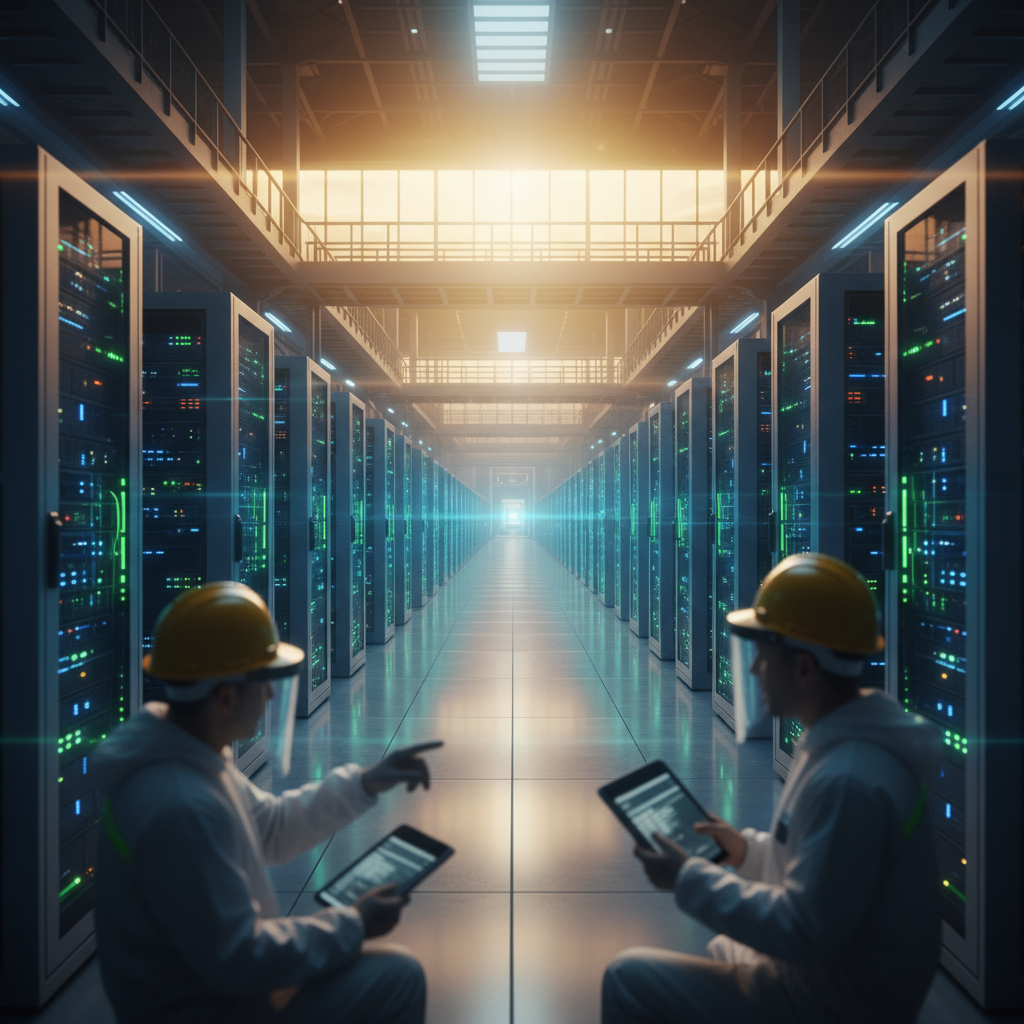
In what analysts are calling a pivotal moment for the artificial intelligence industry, Meta has solidified its position as a dominant force in AI infrastructure through a massive strategic expansion in collaboration with NVIDIA. Throughout 2025, the social media giant has executed a capital expenditure plan exceeding $65 billion, centered on the deployment of a staggering 1.3 million NVIDIA GPUs and the construction of a 2-gigawatt (GW) data center facility-a power envelope roughly equivalent to two nuclear power stations.
This unprecedented scale of investment highlights the escalating "arms race" between Silicon Valley's titans, as companies rush to secure the computational resources necessary to train the next generation of frontier models. According to reports from Reuters and Technology Magazine, Meta's aggressive spending strategy aims to facilitate the training of Llama 4, which the company projects will become the industry's leading state-of-the-art model.
The Scale of the Infrastructure
The sheer magnitude of Meta's 2025 infrastructure build-out redefines the economics of model training. Reports indicate that Meta's new 2GW data center is designed to house a significant portion of its expanding fleet of NVIDIA H100 and next-generation Blackwell GPUs. For context, a 2GW facility represents a concentration of power consumption previously unseen in the tech sector, necessitating innovations in power delivery and cooling.
NVIDIA has been instrumental in enabling this density. According to the NVIDIA Technical Blog, the company rolled out an 800V DC power architecture for data centers in 2025, specifically enhancing the efficiency and reliability required for these "AI factories." Furthermore, NVIDIA pushed its Spectrum-X Ethernet platform heavily throughout the year, acknowledging that while InfiniBand remains the standard for supercomputing clusters, Ethernet is essential for scaling AI solutions to the mass enterprise market.
Financial Implications and Market Reaction
The financial commitment required for this scale of operation is immense. TheStreet reports that Meta revised its capital spending forecast for 2025 to between $70 billion and $72 billion to accommodate these AI data centers. This surge in spending reflects a broader industry trend where infrastructure is viewed not just as an operational cost, but as a critical strategic asset.
"In 2025, I expect Meta AI will be the leading assistant serving more than 1 billion people, Llama 4 will become the leading state of the art model," stated industry observers on Reddit, reflecting the high stakes of Meta's hardware bet.
Strategic Coopetition: The Google Factor
While Meta relies heavily on NVIDIA's hardware, it is simultaneously diversifying its software dependencies. Reuters revealed in December 2025 that Google has been working with Meta on an initiative internally known as "TorchTPU." This project aims to make Google's Tensor Processing Units (TPUs) fully compatible with PyTorch, the open-source machine learning library developed by Meta.
This collaboration signals a complex relationship where Meta utilizes NVIDIA's best-in-class hardware while aiding Google in eroding NVIDIA's software moat-specifically the dominance of the CUDA ecosystem. This move could potentially lower hardware costs in the long term by fostering greater competition in the chip market.
Broader Industry Context
Meta is not alone in this massive scaling effort. NVIDIA and OpenAI announced a historic partnership to deploy 10 gigawatts of systems to scale OpenAI's compute infrastructure, with initial hardware delivery expected by late 2026. This parallel development suggests that 2025 was merely the construction phase for an even more intense computational rivalry in the latter half of the decade.
Government bodies are also stepping into the arena. The "Genesis Mission," a collaboration between NVIDIA and the US government, was launched to boost AI R&D, emphasizing the use of AI in complex systems like nuclear fission and environmental cleanup. This underscores the national security dimensions of AI infrastructure, positioning high-performance compute clusters as critical national assets.
Conclusion and Outlook
The strategic collaboration between Meta and NVIDIA in 2025 has set a new benchmark for industrial-scale AI. By deploying over a million GPUs and investing billions in power and data center facilities, Meta is attempting to brute-force its way to AI supremacy with Llama 4. However, the simultaneous "TorchTPU" initiative with Google suggests a mature, multifaceted strategy designed to prevent vendor lock-in.
As we look toward 2026, the focus will likely shift from procuring hardware to the efficiency of energy utilization and the real-world utility of the models trained on this massive infrastructure. With power consumption rivaling small nations, the sustainability and economic return on these massive "AI factories" remain the defining questions for the next era of technology.


