


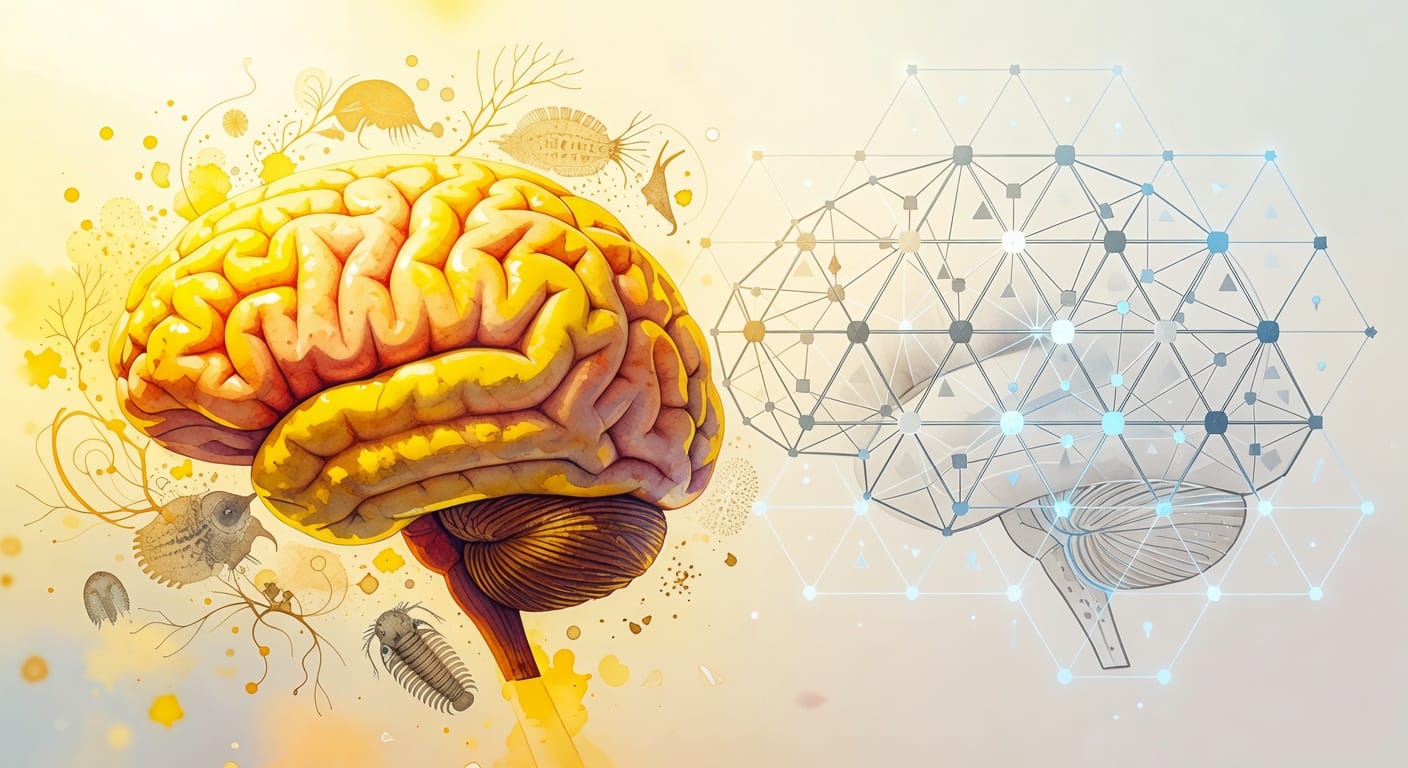
We're living through an inflection point, aren't we? The pace of innovation in Artificial Intelligence is breathtaking. As a leader who's navigated the tech landscape for 25 years, I've seen cycles of disruption, but the current AI surge feels different. It's not just about faster processors or better algorithms; it's about a fundamental reshaping of how we work, live, and even perceive ourselves. Recently, a statement attributed to OpenAI CEO Sam Altman, comparing AI training energy consumption to the "20 years of life and all of the food you eat" to train a human, has been circulating. While I understand the intent to contextualize AI's significant energy footprint and the critical need for sustainability, this analogy, in my view, is not just flawed; it's dangerously reductive.
The drive for energy efficiency in AI is paramount. We absolutely must ensure that the incredible power of AI is harnessed responsibly, with a keen eye on its environmental impact. The energy demands of training massive models are substantial, and ignoring them would be irresponsible. However, framing human development as a mere energy or resource benchmark for artificial intelligence misses the profound, irreducible essence of human existence.
Reflecting on the human element in the age of AI.
It's precisely this kind of framing that gives me pause. My journey has taught me that true innovation isn't just about technological advancement; it's about aligning that advancement with our deepest human values. And when we talk about what it takes to 'train' a human, we're talking about immeasurable, invaluable experiences that extend far beyond mere biological sustenance or time spent.
The Incomparable Value of Human Existence
Let's unpack this analogy for a moment. "20 years of life and all of the food you eat." This reduces a human's formative years to a quantifiable input, a resource cost. But what does it *truly* take to develop a human being? It involves billions of years of evolution, the intricate dance of genetics, countless moments of learning through touch, taste, sight, sound, and emotion. It encompasses the love of family, the frustration of failure, the joy of discovery, the societal interactions that shape our consciousness, and the development of empathy, creativity, and critical thinking.
This is not about calories and clock time. It's about the emergence of consciousness, the capacity for abstract thought, the ability to create art, to feel compassion, to build relationships, and to contribute to a society. These are qualities that, as of today, remain uniquely human and are the result of a process so complex and profound that comparing it to the energy required to train a neural network is like comparing a single spark to the entire universe.
Evolution's Pinnacle, Not a Benchmark
Humanity, in all its messy, beautiful complexity, is the product of an evolutionary journey spanning eons. We are not a static creation; we are dynamic beings shaped by a universe of experiences. To use our existence, our development, as a yardstick for the efficiency of artificial intelligence is, frankly, a philosophical misstep. It suggests a utilitarian view of human life that, if taken to its logical conclusion, could have dangerous ethical implications.
My experience, particularly in the diverse and rapidly evolving markets of Asia, has shown me the immense value placed on human capital, mentorship, and the organic growth of talent. In India, for instance, the concept of 'Guru-Shishya Parampara' (teacher-disciple tradition) emphasizes the deep, reciprocal relationship involved in knowledge transfer and personal development, a far cry from the transactional nature of data input for AI.
A Micro-Story from My 25 Years
Back in the early 2000s, when I was just starting out with my first venture, we were working on a complex software solution for a client in the logistics sector. The project demanded a deep understanding of intricate supply chain dynamics, something our young team was still learning. We had brilliant young developers, eager and smart, but they lacked the seasoned intuition that comes from years of facing real-world challenges. I remember spending countless late nights not just coding, but mentoring. It wasn't about feeding them data; it was about guiding them through problem-solving, encouraging them to ask 'why,' to empathize with the end-user, to anticipate potential pitfalls. This process, far beyond mere hours or resources, forged their understanding and built the foundation for many future successes. It was a testament to the fact that human development is about cultivation, not just consumption of resources.
The Ethics of AI Development: Beyond Resource Parity
The pursuit of sustainable AI is a crucial endeavor. We must innovate on hardware efficiency, explore greener algorithms, and invest in renewable energy sources for data centers. Companies like Microsoft are investing heavily in these areas, and it's commendable. However, our ethical compass must guide this pursuit, ensuring we don't devalue human life in the process.
Consider this: AI models, no matter how sophisticated, are tools. They are designed, trained, and deployed by humans. Their output, their capabilities, are a reflection of human ingenuity, data curated by humans, and objectives set by humans. The very act of creating and refining these AI systems requires human creativity, critical thinking, and ethical deliberation-qualities that cannot be replicated by simply optimizing energy inputs.
The danger in Altman's analogy lies in its subtle implication that human existence itself can be measured against an efficiency metric. This is a slippery slope. If we begin to see human life as a resource benchmark for machines, where does that lead us? It risks fostering a utilitarian perspective that prioritizes computational output over human well-being, a dangerous paradigm shift that could erode fundamental ethical principles.
The sacredness of human existence is not a variable in an efficiency equation; it is the fundamental truth upon which all ethical progress must be built.
Protecting Our Ethical Core in the AI Age
As leaders, developers, and consumers of technology, we have a responsibility to ensure that AI development remains firmly rooted in humanistic values. This means:
- Prioritizing AI safety and ethical guidelines that explicitly safeguard human dignity.
- Investing in research that explores AI's societal impact, not just its computational power.
- Fostering transparency in AI development and deployment.
- Engaging in open dialogue about the long-term implications of AI on human society.
- Championing the intrinsic value of human life and creativity, recognizing it as the source and ultimate purpose of our technological pursuits.
The energy required to train an AI model is a technical challenge with tangible solutions. The development of a human consciousness, on the other hand, is a marvel of nature, an unfolding miracle that defies simple quantification. Let's focus on making AI sustainable, yes, but let's never, ever use the immeasurable value of human existence as a benchmark for its efficiency.
AI Energy Consumption: A Look at the Data
While the human analogy is problematic, the energy consumption of AI is a real and pressing concern. It's important to ground our discussions in facts and figures. Training large language models (LLMs) can indeed consume significant amounts of electricity, impacting carbon footprints and operational costs. The race for more powerful AI models often translates to larger datasets and more complex architectures, intensifying this demand.
Here's a snapshot of AI's energy footprint considerations:
| Metric | Description | Impact/Consideration |
|---|---|---|
| Training Energy Consumption | Electricity used to train large AI models. Can range from thousands to millions of kilowatt-hours (kWh). | Significant carbon footprint if not powered by renewables; high operational costs. |
| Inference Energy Consumption | Energy used by AI models during operation (e.g., answering queries). This is often more frequent and cumulative than training. | Scales with usage. Critical for widespread AI adoption and real-time applications. |
| Hardware Efficiency | Advancements in specialized AI chips (like those from NVIDIA) and hardware design. | Reduces energy per operation, making AI more feasible and sustainable. |
| Algorithmic Optimization | Development of more efficient algorithms that require less computation. | Smaller model sizes, faster processing, and lower energy demands are key research areas. |
| Data Center Sustainability | Powering data centers with renewable energy sources and improving cooling efficiency. | Major tech companies like Google and AWS are committing to 100% renewable energy. |
According to a study cited by Statista, the energy consumption of training a single large language model can be equivalent to the annual energy use of hundreds of households. This highlights the urgent need for innovation in energy-efficient AI. However, it also underscores why a direct comparison to human life is fundamentally misplaced.
The Future We Build: AI for Humanity
My vision for AI is one where it serves as a powerful amplifier of human potential, not a replacement or a benchmark against which humanity is measured. We are seeing incredible applications emerge from companies like Anthropic and initiatives at IBM that focus on responsible AI development. This is the path forward.
The energy debate around AI is vital. It challenges us to be more innovative, more responsible, and more mindful of our planet. But let's ensure our conversations are framed by respect for the profound value of human life, an evolutionary masterpiece that dwarfs any computational benchmark we could ever devise. Let's build AI that reflects our highest aspirations, not our basest utilitarian calculations.
As we continue to push the boundaries of artificial intelligence, let us remember that the true measure of our success will not be the energy efficiency of our machines, but the positive impact they have on human lives and the ethical integrity of the systems we create. Let's strive for a future where technology elevates humanity, always.


