


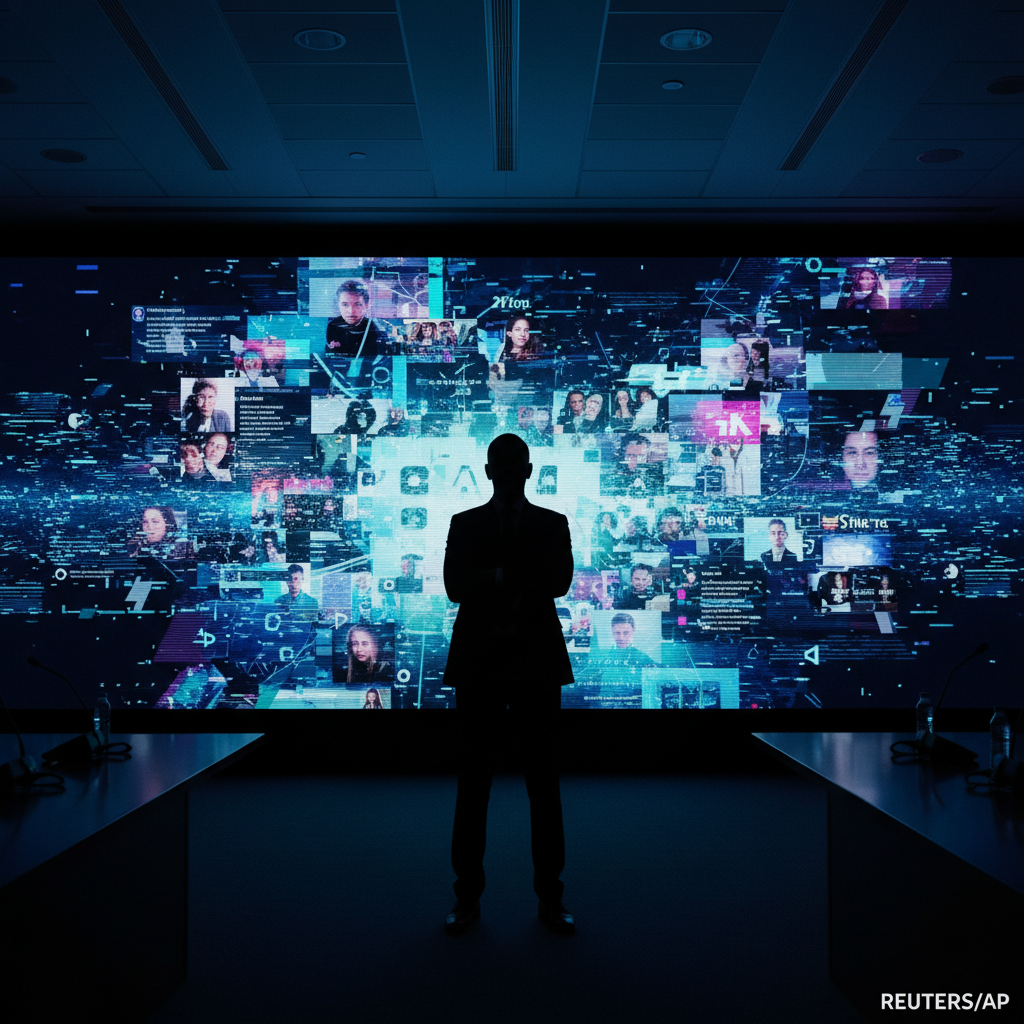
In a significant admission that marks a turning point for digital content moderation, Instagram head Adam Mosseri has acknowledged that social media platforms are losing the technological arms race against generative AI. In a series of statements made over the New Year holiday, Mosseri conceded that as artificial intelligence becomes increasingly adept at faking reality, Instagram's ability to reliably identify and label "AI slop" will inevitably falter. The admission suggests a fundamental shift in strategy for Meta: moving away from detecting fakes and toward a system of "fingerprinting" real media.
The commentary, released via a widely circulated Threads post and subsequent year-end memos, paints a stark picture of the digital landscape in 2026. According to Mosseri, the "polished feed" that defined Instagram's aesthetic for a decade is effectively dead, rendered obsolete by AI tools that can replicate perfection instantly. The implications for creators, businesses, and global information integrity are profound.

The Death of Detection
For years, Meta and other tech giants have promised that advanced algorithms would serve as a shield against the flood of synthetic content. However, Mosseri's recent statements effectively signal a retreat from that promise. According to reports from The Economic Times and Business Insider, Mosseri stated explicitly that while platforms will continue to identify AI content for now, "they'll get worse at it over time as AI gets better."
The core issue, as described by Mosseri, is the ubiquity and quality of generative tools. The Hans India reports that Mosseri warned, "authenticity is becoming infinitely reproducible." This means that the visual cues humans and machines once relied on to discern reality are vanishing.
"It will be more practical to fingerprint real media than fake media." - Adam Mosseri, via Engadget
The Pivot to 'Proof of Reality'
With detection failing, the proposed solution is an inversion of the current model. Rather than assuming content is real until proven fake, the future internet may treat content as synthetic until proven real. Mosseri suggested that the industry must move toward "fingerprinting real media," a process that would likely involve camera manufacturers and software developers cryptographically signing photos and videos at the moment of capture.
This aligns with reporting from HotHardware, which notes that Mosseri is "calling out camera makers" to integrate these verification standards. If implemented, a digital signature would travel with the file, allowing platforms like Instagram to verify that an image originated from a physical sensor rather than a prompt box.
The Rise of 'Raw' and the Imperfection Economy
In the interim, before cryptographic standards become universal, user behavior is already shifting. According to The Verge, creators are "leaning into imperfection" as a signal of humanity. Shaky video, poor lighting, and unedited "photo dumps" are becoming the new currency of trust.
However, Mosseri warned that this is merely a stopgap. KnowTechie highlights his observation that "AI will learn to fake imperfection, too." Once generative models master the nuances of bad lighting and human error, the visual distinction will collapse entirely. As noted in Nation Thailand, "too-perfect" content is already losing appeal, but soon even "raw" content will be suspect.
Business and Political Implications
This shift presents a volatile environment for advertisers and political entities. Analysis from On my Om suggests that the underlying driver is commercial: "Advertisers do not want fake people or fake stories." If user trust evaporates, so does ad revenue. Brands may soon require creators to provide cryptographic proof of their content's origin, altering the influencer economy.
Politically, the implications are even more severe. With Times of India reporting that Meta is "admitting defeat" in reliable detection, the upcoming election cycles globally face a heightened risk of disinformation. If platforms cannot police AI slop, the burden falls entirely on the user to discern truth-a task Mosseri admits is becoming "impossibly difficult."
Outlook: The Era of 'Who' Not 'What'
We are entering a phase where the content itself-the image or the video-provides no inherent proof of its own existence. Mosseri argues that trust will shift from what is being shown to who is showing it. Identity verification and long-term reputation will likely replace visual evidence as the primary metric of truth.
As we move deeper into 2026, expect a massive push for hardware-level authentication from companies like Apple, Samsung, and Sony, pressured by social platforms desperate to outsource the problem of verification. Until then, as Mosseri bluntly put it, "the feeds are starting to fill up with synthetic everything," and the tools to stop it are coming up short.


