



San Jose - In a decisive move to secure its dominance in the rapidly evolving digital content sector, Adobe has fundamentally restructured its approach to generative AI through a series of major announcements in late 2025. culminating at the Adobe MAX conference in October and subsequent updates in December. By integrating third-party AI models from competitors such as Runway and OpenAI directly into its Creative Cloud ecosystem, alongside the launch of its own commercially safe Firefly Video Model, Adobe is effectively positioning itself not just as a toolmaker, but as the central operating system for the AI-driven creative economy.
The strategic shift represents a significant departure from the company's previous reliance on proprietary technology alone. Faced with a fragmented landscape where creative professionals often fragment their workflows across various specialized AI startups, Adobe's new "all-in-one creative AI studio" strategy aims to arrest this churn. The introduction of "Generate Soundtrack" and "Generate Speech," combined with the capability to access non-Adobe models like Google's Imagen3 and Black Forest Labs' Flux 1.1 Pro within Firefly, signals a clear intent to monopolize the user's attention span by removing the need to ever leave the Creative Cloud interface.
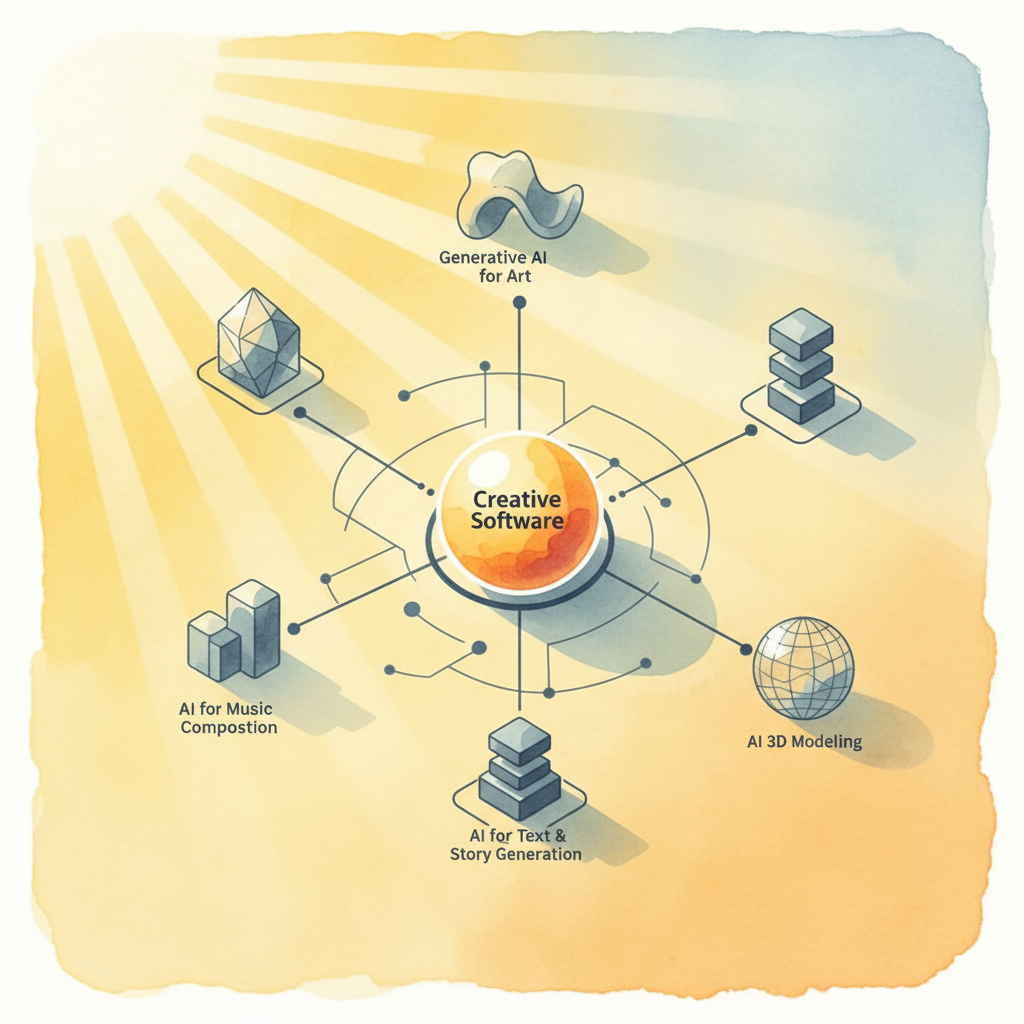
The Pivot to an Open AI Ecosystem
For much of the generative AI boom, Adobe distinguished itself through "commercially safe" models trained on licensed Adobe Stock data. This approach appealed to enterprise clients wary of copyright litigation but often left individual creators feeling that Firefly lacked the stylistic flexibility of wilder, web-scraped models. The announcements from late 2025 mark a hybridization of this strategy. According to reports from Adobe MAX, the company is now integrating external models directly into its ecosystem.
This "bring your own model" approach was highlighted by the partnership with Runway, a leader in AI video generation. As of December 2025, Runway's Gen-4.5 model is available within the Adobe Firefly app. This allows Adobe to offer the cutting-edge experimental capabilities of startups while retaining the user within its subscription ecosystem. By aggregating these tools, Adobe mitigates the risk of users canceling Creative Cloud subscriptions in favor of a patchwork of cheaper, standalone AI tools.
"Adobe is empowering everyone to create... [and] delivering the most comprehensive creative AI platform in the industry," the company stated in a press release, emphasizing the shift from a closed garden to a managed platform.
Video and Audio: The New Battleground
While static image generation has become commoditized, video and audio generation represent the current frontier of technological competition. Adobe's updates in Q4 2025 focused heavily on these mediums. The introduction of the Firefly Video Model into public beta allowed for text-to-video generation that is integrated with editing timelines. Features such as "Prompt to Edit" and camera-motion controls address a specific pain point in professional video production: the lack of granular control in generative video.
Furthermore, the launch of "Generate Soundtrack" and "Generate Speech" within the Firefly ecosystem closes the loop on audiovisual production. Previously, a creator might generate an image in Midjourney, animate it in Runway, and generate voiceovers in ElevenLabs. Adobe's consolidation means a producer can arguably perform all these tasks within Premiere Pro or the Firefly web app. This consolidation is backed by significant adoption numbers; data released by Adobe indicates that Firefly had generated over 22 billion assets by April 2025, a figure that has likely accelerated with the inclusion of video capabilities.
Market Implications and Adoption
The market response suggests that integration is winning over fragmentation. By April 2025, Firefly had reportedly captured a 29% market share in the generative asset space. The introduction of unlimited generations for Firefly Pro users through late 2025 serves as an aggressive customer acquisition and retention tactic. This pricing power allows Adobe to squeeze smaller competitors who face higher compute costs per user without the cushion of a massive diverse subscription bundle.
The "Safe" vs. "Open" Dichotomy
A critical component of Adobe's strategy remains its legal shielding for enterprise clients. The core Firefly models are trained on Adobe Stock images, allowing the company to offer indemnification against copyright claims-a guarantee that open models scraped from the public internet cannot provide. However, by now offering access to non-Adobe models like Google's Veo2 and OpenAI's GPT within the same interface, Adobe effectively bifurcates its user base.
Corporate marketing departments can remain within the "safe" walled garden of Firefly proper, while independent creators and experimental studios can toggle to third-party models without leaving the application. This flexibility effectively neutralizes the primary advantage of competitors: model variety. Experts suggest this is a classic "embrace and extend" strategy, designed to commoditize the underlying AI models while retaining the value in the workflow layer-the Creative Cloud interface itself.
Looking Ahead: The Age of AI Agents
The trajectory set by the 2025 updates points toward a future where human creators act more as directors than operators. The terminology used at Adobe MAX-referring to "AI agents" rather than just tools-implies autonomous capabilities where software doesn't just execute a command but anticipates a workflow. With features like "Prompt to Edit" and automated culling in Lightroom, the labor-intensive parts of creativity are being systematically automated.
As 2026 approaches, the tension between creative convenience and vendor lock-in will likely intensify. Adobe has successfully navigated the initial disruption of generative AI by absorbing it. The question for the industry now is whether independent AI platforms can survive as standalone businesses, or if they are destined to become mere plugins in the Adobe ecosystem.


