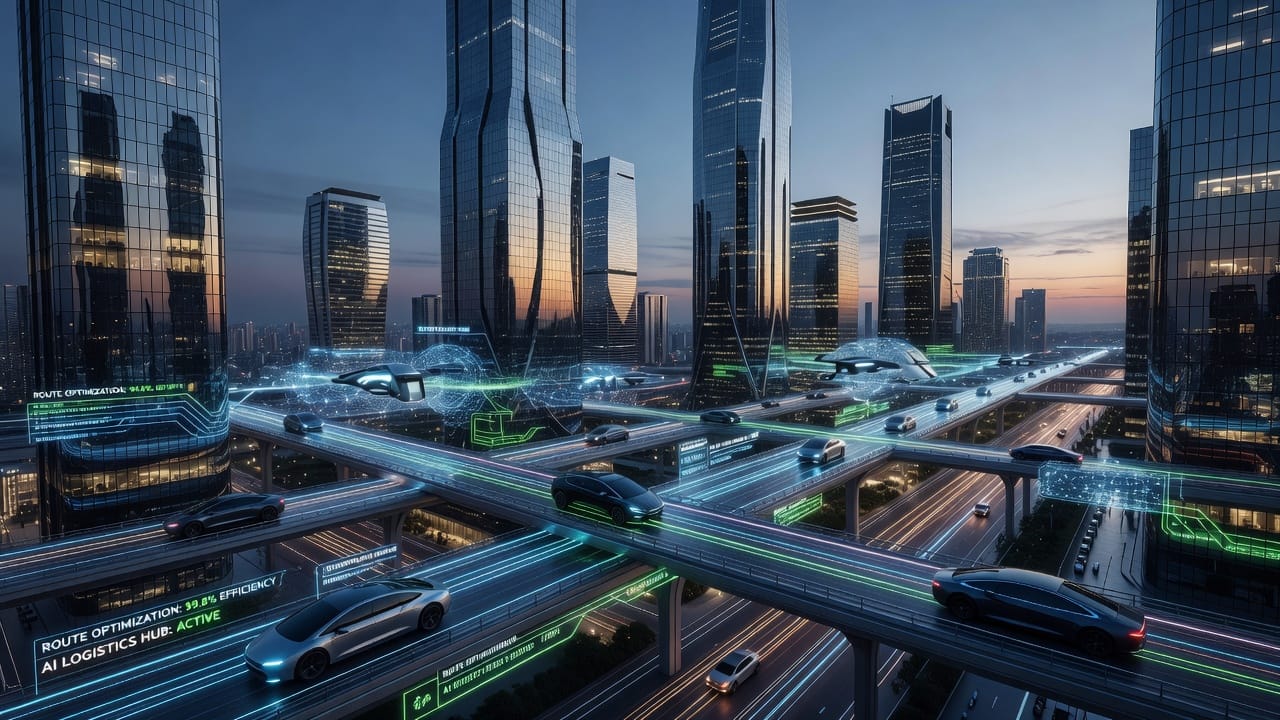
Let's get one thing straight: AI agents aren't some far-off sci-fi dream for logistics and supply chain management. The common narrative, often spun by tech enthusiasts and even some established players, paints them as a future revolution. I'm here to tell you that's a dangerous misconception. They are not future concepts; they are scalable, present-day solutions that are actively reshaping our industries, and frankly, if you're still waiting, you're already behind.
My journey through two decades in tech, particularly in the dynamic landscape of India, has taught me that what seems futuristic today is often a necessity tomorrow. I've seen countless businesses hesitate, caught in the inertia of "wait and see," only to find themselves outmaneuvered by agile competitors who embraced new technologies. This is precisely the case with AI agents in logistics. The transformation isn't coming; it has begun, and the impact on operational resilience and cost reduction is profound and immediate.
The Seismic Shift: From Manual to Intelligent Operations
The traditional logistics and supply chain model, while functional for decades, is inherently brittle. It relies on human intervention at too many points, leading to inefficiencies, errors, and a lack of real-time adaptability. Think about the endless spreadsheets, the siloed communication channels, and the gut-feel decisions that have plagued supply chain managers for years. These are not just minor annoyances; they are significant drains on resources and create vulnerabilities that are exploited by market fluctuations.
The introduction of AI agents is fundamentally altering this paradigm. These intelligent systems are not just automating tasks; they are augmenting human decision-making and, in many cases, making autonomous decisions that were previously unthinkable. This isn't about replacing people; it's about empowering them with tools that amplify their capabilities, allowing them to focus on strategic challenges rather than getting bogged down in operational minutiae. This shift is critical for businesses aiming for agility and resilience in today's volatile global market.
Decoding the Core: Intelligent Route Optimization and Warehouse Autonomy
At the heart of this revolution lie two transformative areas: intelligent route optimization and autonomous warehouse operations. My early ventures often involved manual route planning, and I can vividly recall the hours spent poring over maps and traffic data, only to be blindsided by an unexpected road closure or surge in demand.
Minimizing Miles, Maximizing Margins: Intelligent Route Optimization
Intelligent route optimization, powered by AI agents, goes far beyond simple GPS navigation. These agents analyze a multitude of real-time variables - traffic patterns, weather conditions, delivery windows, vehicle capacity, and even historical delivery times - to devise the most efficient routes. The impact is direct and measurable: significant reductions in fuel costs, lower carbon emissions, and drastically improved delivery times. We've implemented AI-driven routing solutions that have cut delivery times by as much as 20% and fuel expenses by 15% within the first year.
The Autonomous Warehouse: A Symphony of Robotics
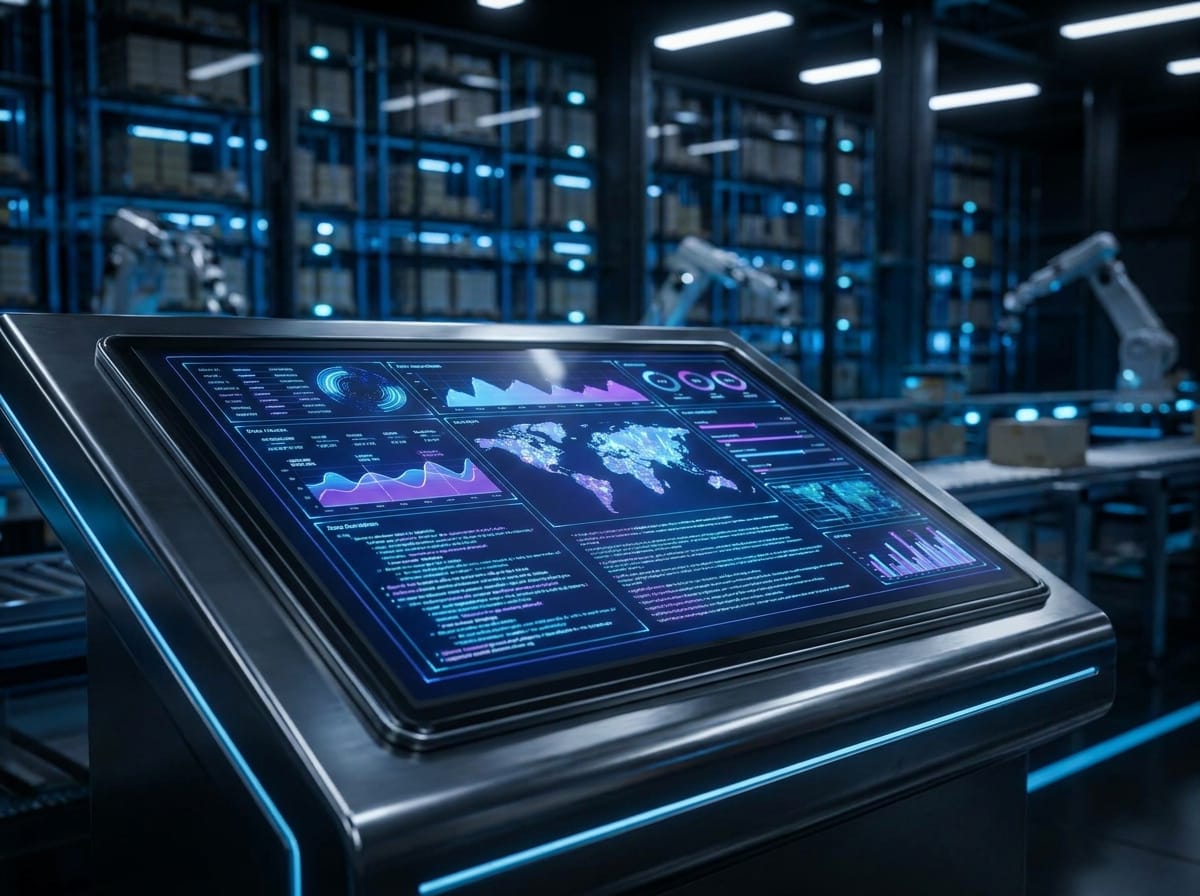
Similarly, the warehouse, once a domain of manual labor and forklifts, is now being transformed by autonomous robotics guided by AI. Think of robots sorting, picking, and packing goods with unparalleled speed and accuracy. These AI agents manage the complex choreography of autonomous mobile robots (AMRs), optimizing their movements to avoid congestion and maximize throughput. This leads to reduced labor costs, fewer picking errors, and a much faster order fulfillment cycle. The precision offered by these systems is something we simply couldn't achieve manually.
We once worked with a large e-commerce fulfillment center in Bengaluru that was struggling with peak season demand. Their manual picking process was leading to significant delays and high error rates. After implementing an AI-driven robotic system for their sorting and retrieval, they not only cleared their backlog within weeks but also saw a 30% reduction in order fulfillment time and a nearly 99% accuracy rate for picked items, allowing them to handle a 40% increase in order volume without adding headcount.
Predictive Power and Real-Time Vigilance
Beyond physical operations, AI agents are bringing unprecedented intelligence to planning and monitoring, areas where human foresight often falls short.
Forecasting the Future: Predictive Demand Analytics
Accurate demand forecasting is the holy grail of supply chain management. Historically, this has been a challenge, relying on historical sales data and often leading to overstocking or stockouts. AI agents, however, leverage predictive analytics that incorporate a far wider array of data points - economic indicators, social media trends, competitor activities, and even weather forecasts. This allows for far more granular and accurate predictions, enabling businesses to optimize inventory levels, reduce waste, and capitalize on market opportunities. The ability to anticipate demand shifts with greater certainty has been a game-changer for inventory management and production planning.
The Watchful Eye: Real-Time Tracking and Anomaly Detection
Real-time shipment tracking has become an expectation, but AI agents elevate this by incorporating anomaly detection. This means not just knowing where a shipment is, but also being alerted to potential issues - delays, temperature excursions, or deviations from expected transit times - *before* they become critical problems. This proactive approach allows for swift intervention, mitigating risks and ensuring that goods reach their destination intact and on time. My experience has shown that early detection of issues can prevent cascading failures throughout the supply chain.
Inventory Intelligence and End-to-End Visibility
The cumulative impact of these AI-driven enhancements is a supply chain that is not only more efficient but also far more transparent and adaptable.
Dynamic Stock Management: Inventory Intelligence
AI agents transform inventory management from a static, often manual, process into a dynamic, intelligent system. By integrating with demand forecasts and real-time sales data, these agents can dynamically adjust reorder points, recommend optimal stock levels across different locations, and even predict potential obsolescence. This level of inventory intelligence minimizes holding costs while ensuring that the right products are available at the right time, avoiding both costly overstocking and disruptive stockouts. This is crucial for maintaining customer satisfaction and profitability.
Seeing the Whole Picture: End-to-End Supply Chain Visibility
Perhaps the most profound impact of AI agents is the achievement of true end-to-end supply chain visibility. By integrating data from every stage - from raw material sourcing to manufacturing, warehousing, distribution, and final delivery - AI agents create a unified, real-time view of the entire supply chain. This unparalleled visibility allows for better strategic decision-making, quicker problem resolution, and the identification of bottlenecks or inefficiencies that might otherwise remain hidden. It empowers businesses to move from reactive problem-solving to proactive optimization, fostering greater resilience.
The Current Landscape: Autonomous Fleets and AI-Driven Platforms
The trends we're witnessing underscore the immediacy of this AI revolution. Autonomous logistics fleets, once a distant vision, are now a tangible reality being piloted and deployed globally. These fleets, guided by sophisticated AI, promise to further optimize delivery and reduce human error. Furthermore, AI-driven planning platforms are emerging as central command centers, enabling fully automated decision-making across various supply chain functions. This shift towards autonomous decision-making is not about removing human oversight entirely, but about empowering AI agents to handle routine, complex decisions, freeing up human leaders for higher-level strategy and exception management.
The true power of AI agents in logistics lies not in their potential, but in their present capability to deliver tangible results. We've moved beyond theoretical discussions; the operational resilience and cost reduction they offer are here, now, for businesses willing to embrace them.
The data speaks for itself, highlighting the concrete benefits organizations are already realizing:
Defining Success: Measurable Impacts and Strategic Advantages
Defining success in this new era of AI-driven logistics is about more than just efficiency metrics; it's about building an organization that is inherently more resilient, responsive, and profitable. Success looks like a supply chain that can absorb disruptions without significant impact, that can pivot quickly to meet changing customer demands, and that consistently operates at peak efficiency. Key performance indicators (KPIs) should reflect this evolved understanding:
Measurable outcomes include not just reduced operational costs and faster delivery times, but also increased customer satisfaction scores due to fewer errors and more reliable deliveries. We also look at improved asset utilization, reduced waste, and enhanced employee productivity as AI agents handle the more repetitive and data-intensive tasks. Ultimately, success is measured by a stronger competitive position and greater agility in the face of market uncertainty.
The Path Forward: Embracing Present-Day AI Solutions
My early career was often marked by enthusiasm for cutting-edge tech, but also by the painful lessons learned from misapplied solutions. The key takeaway for any business looking to leverage AI agents in logistics is this: the technology is mature enough for immediate deployment. It's not about waiting for perfect, but about implementing scalable solutions that offer tangible benefits today. The question is no longer *if* AI agents will transform logistics, but *how quickly* you can integrate them to gain a competitive edge.
At Indianic.com, we specialize in developing custom AI agent solutions and logistics automation tailored precisely to the unique challenges faced by modern supply chains. We understand that the journey requires a strategic approach, blending proven AI capabilities with your specific operational needs.
As you look at your own logistics and supply chain operations, what is the single biggest area where you believe AI agents can deliver the most immediate, transformative impact for your business?
