


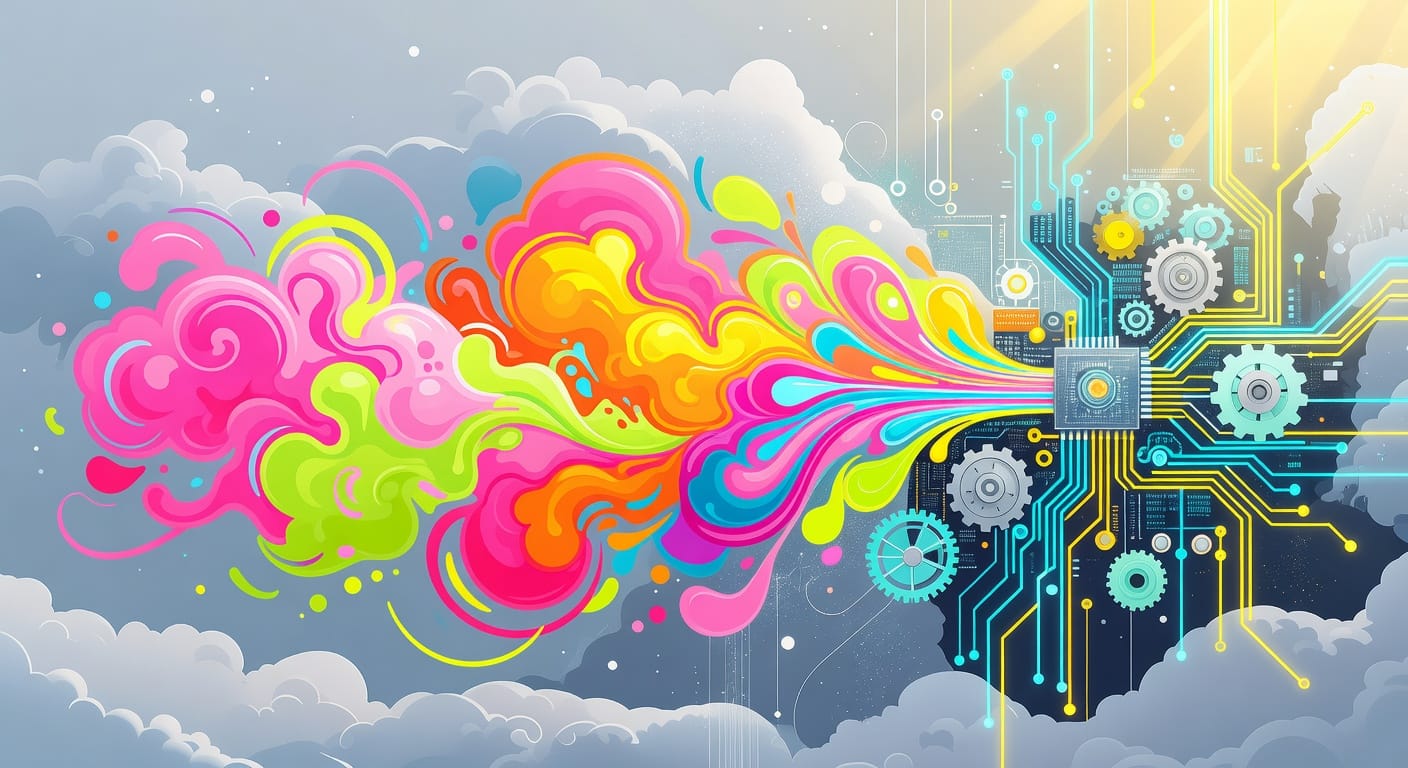
The air in Stockholm feels different as the days lengthen. There's a certain hum, a subtle shift, much like the evolution I've observed in the digital realm. For the past five years, working with photography and digital visuals, I've witnessed firsthand how language shapes perception. Today, I want to explore a profound shift in how we talk about Artificial Intelligence - specifically, the fascinating evolution of AI agent terminology. It's a journey from casual whispers to structured symphonies, and it tells us so much about where we are and where we're heading.
When I first started dabbling in digital art and AI-assisted creation, terms like 'bots' and 'chatbots' felt whimsical, almost like playful companions. We'd chat with them, ask for 'vibes,' or simple creative prompts. The language was informal, mirroring the early, experimental nature of these tools. It was a conversation, a flirtation with possibilities. But as AI agents have matured, evolving from reactive question-answerers to proactive, autonomous systems capable of complex planning and tool utilization, these early metaphors have begun to feel... insufficient. They no longer capture the depth, the structure, or the sheer engineering prowess now at play.

My own journey began with a simple fascination for light and shadow, captured through a lens. Five years ago, I remember meticulously editing a series of portraits, wrestling with software to achieve a specific mood. I found myself wishing for an assistant, a digital partner that could understand the subtle nuances of my vision. Back then, the closest we had were basic filters and automation scripts. Now, the agents we interact with can analyze complex visual datasets, plan multi-step editing workflows, and even collaborate on creative projects in ways that were once the stuff of science fiction. The 'vibes' we sought are now being systematically engineered.
The Lexical Shift: From Metaphor to Engineering Reality
The change in terminology is more than just semantics; it's a reflection of fundamental advancements. When we moved beyond simple command-and-response, the language had to catch up. The era of 'bots' feels like a distant memory as we embrace terms like 'agents,' 'workflows,' and 'orchestration.' This shift signifies a move from metaphor to a concrete engineering reality, where capabilities are defined by structured processes and demonstrable outcomes, rather than abstract feelings or casual interactions.
Agents: Beyond Simple Automation
The term 'agent' itself is more robust than 'bot.' A bot often implies a specific, repetitive task. An agent, in the AI context, suggests a degree of autonomy, decision-making capability, and the ability to act within an environment to achieve a goal. Think of an autonomous drone navigating a complex terrain versus a simple script that downloads files. This distinction is crucial as AI systems are now designed to perceive, reason, plan, and act.
Workflows: Structuring Complex Tasks
The concept of 'workflows' has become central. Instead of asking an AI to perform a single action, we are now designing sequences of actions - entire processes. This is particularly evident in fields like software development, where tools like GitHub are integrating AI agents to manage code reviews, test deployments, and even suggest architectural improvements. Similarly, in content creation, AI is not just generating text or images; it's orchestrating entire content pipelines, from initial ideation to final distribution. Platforms like Adobe are weaving these sophisticated workflows into their creative suites.
Orchestration: The Conductor of Capabilities
Perhaps the most telling term is 'orchestration.' This implies a higher level of control and coordination, akin to a conductor leading an orchestra. AI orchestration involves managing multiple AI agents, ensuring they work harmoniously together, and integrating them with existing business systems. This is where enterprise-level AI truly shines. Companies are no longer just using AI for isolated tasks; they are building complex systems where AI agents are coordinated to achieve strategic objectives. This requires sophisticated engineering, robust APIs, and a deep understanding of how different AI capabilities can be combined.
The Maturation of Language, The Maturation of Technology
This evolution in terminology mirrors the maturation of AI technology itself. We've moved past the initial hype cycles and are now firmly in an era of tangible engineering discipline. The language reflects a grounding in practicality, efficiency, and demonstrable value. It signals a move towards serious enterprise integration, where AI is not just a novel experiment but a foundational component of business operations.
The focus has shifted from 'what can AI do?' to 'how do we build AI systems that reliably deliver specific outcomes?' This is a subtle but critical difference. It implies a move towards predictable performance, scalability, and accountability - all hallmarks of mature engineering practices. The casual 'vibes' have been replaced by the structured precision of algorithms and system design.
The capabilities we are witnessing are no longer abstract possibilities; they are concrete, measurable achievements. For instance, consider the advancements in AI-powered customer service. While early chatbots could answer FAQs, modern AI agents can now handle complex troubleshooting, personalize interactions based on extensive customer data, and even predict customer needs. Companies like Salesforce are at the forefront of integrating these intelligent agents into their CRM platforms.
This maturation isn't limited to customer service. In the realm of data analysis, AI agents are moving beyond simple reporting to uncover hidden patterns, predict market trends, and even recommend strategic adjustments. This level of insight generation requires sophisticated planning and tool use, far beyond the scope of early chatbots. Tools that were once considered niche are now becoming integrated into broader platforms, facilitated by robust APIs and the concept of agent orchestration. Even platforms like Microsoft and Google Cloud are heavily investing in these agent-based architectures.
| Feature | Early Chatbots (Pre-2020) | Modern AI Agents (2024+) |
|---|---|---|
| Core Functionality | Rule-based, keyword matching, simple Q&A | Autonomous planning, reasoning, tool use, complex problem-solving |
| Autonomy | Minimal to none; reactive | High; proactive and goal-oriented |
| Task Complexity | Single, predefined tasks | Multi-step, dynamic, and emergent tasks |
| Integration | Basic API integrations | Deep integration with business systems, other AI agents |
What This Lexical Shift Signals for the Future
The shift in language from 'vibes' and 'bots' to 'agents,' 'workflows,' and 'orchestration' is not just a linguistic trend; it's a profound signal about the current state and future trajectory of AI. It tells us that we are moving beyond the novelty and into an era of serious engineering and enterprise-grade solutions. The technology is maturing, becoming more robust, reliable, and integrated into the fabric of our digital lives and businesses.
The evolution of AI agent terminology reflects a transition from conceptual possibility to engineering reality, marking a critical juncture for technology adoption and integration.
This signifies several key things:
- Increased Sophistication: AI is capable of much more complex tasks than previously imagined.
- Focus on Practical Application: The language now emphasizes how AI can be systematically applied to solve real-world problems.
- Emphasis on Collaboration: 'Orchestration' highlights how AI systems are designed to work together and with human teams.
- Enterprise Readiness: The terminology is aligned with established engineering and business process management concepts, signaling maturity for large-scale deployment.
For me, as someone who started by understanding how light shapes an image, seeing how structured logic and autonomous agents are now shaping entire industries is a remarkable parallel. Just as a photographer carefully plans their composition, lighting, and post-processing to achieve a specific visual narrative, so too are engineers now meticulously designing AI systems to achieve complex, orchestrated outcomes. The underlying principles of planning, execution, and refinement are surprisingly similar.
Moving Beyond Hype to Tangible Engineering Discipline
The journey from 'vibes' to 'workflows' is a testament to the relentless pace of innovation. It's a clear indication that the AI landscape is solidifying into a discipline grounded in robust engineering principles. We are seeing the emergence of structured methodologies, best practices, and a focus on measurable results. This is precisely what is needed to move AI from a nascent technology to a foundational element of our future. Companies like McKinsey and Gartner are tracking this shift, highlighting the increasing adoption of AI in strategic business functions.
This doesn't mean the creative spark is lost. Rather, it's amplified. By offloading routine tasks and complex processes to intelligent agents, humans are freed to focus on higher-level strategy, creativity, and human-centric problem-solving. The tools are becoming more capable, allowing us to achieve outcomes that were previously impossible, much like how advanced camera technology and editing software have pushed the boundaries of photographic art.
The future likely holds even more specialized AI agents, working in concert to achieve unprecedented levels of automation and intelligence. We might see agents specializing in ethical decision-making, others in predictive maintenance, and still more in hyper-personalized education. The key will be how effectively we can orchestrate these diverse capabilities.
This ongoing evolution of language is not just about naming things; it's about framing our understanding, setting expectations, and guiding the development of AI in a direction that is both powerful and responsible. The shift from casual metaphors to precise engineering terms is a positive sign, indicating that we are building a more robust and valuable future with AI.
So, as we look ahead, let's embrace this new language of AI. It's a language of action, of structure, and of immense potential. Let's explore how these sophisticated agents and their orchestrated workflows can help us achieve our own creative and professional goals. The digital canvas is wider and more dynamic than ever before.


