
The future of enterprise AI adoption isn't about finding the *next big thing*; it's about intelligently integrating foundational, powerful models into existing, robust delivery fabrics. Many are chasing novelty, but the real transformation lies in synergy.
The Evolving AI Landscape in IT Services
The IT services sector has always been a barometer for technological adoption, and AI is no exception. We've moved beyond pilot projects and proof-of-concepts into an era where AI is becoming an indispensable component of how services are designed, developed, and delivered. The demand for faster development cycles, enhanced code quality, and more collaborative workflows is pushing the boundaries of what's possible. Clients expect more intelligence embedded in their solutions, and service providers must deliver it efficiently. This shift necessitates not just access to advanced AI models but also a framework that seamlessly integrates them into operational DNA.
Understanding LTIMindtree's Anthropic Integration: Claude's Role in BlueVerse
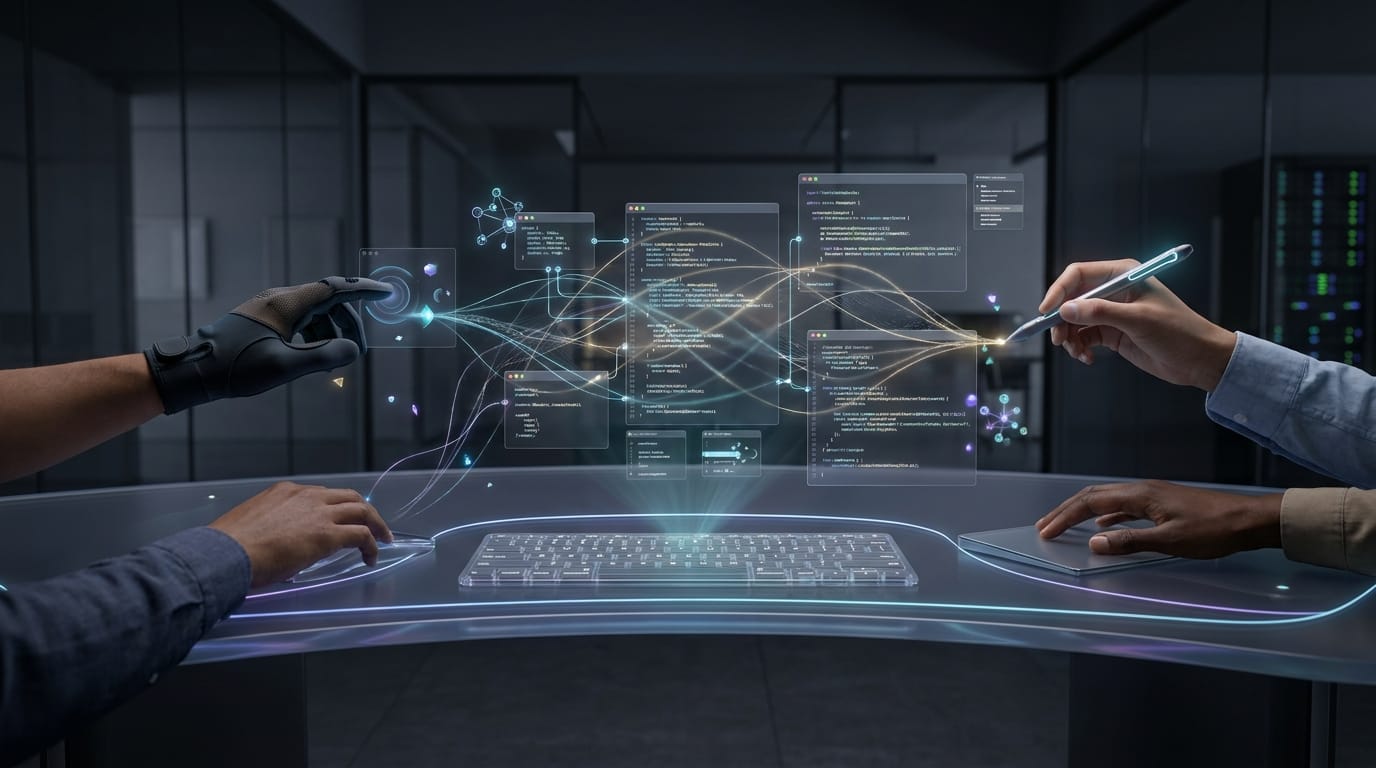
LTIMindtree's strategic partnership with Anthropic, a leader in AI safety and research, is a significant development for enterprise AI adoption in the IT services industry. The core of this collaboration is the integration of Anthropic's state-of-the-art AI models - specifically Claude, Claude Code, and Claude Cowork - into LTIMindtree's proprietary BlueVerse AI Delivery Fabric. This isn't just about adding another tool to the stack; it's about embedding intelligence at a foundational level across the entire service delivery lifecycle. Claude, known for its strong reasoning and conversational abilities, is poised to revolutionize how IT services are conceptualized and executed. Claude Code, as its name suggests, is tailored for the nuances of software development, offering sophisticated code generation, debugging, and optimization capabilities. Claude Cowork aims to enhance team collaboration, making AI a virtual team member that assists in knowledge sharing and task management. The BlueVerse fabric, LTIMindtree's platform designed to accelerate digital transformation, now becomes a powerful engine for AI-driven innovation, capable of orchestrating these advanced AI assistants to augment human expertise.
Accelerating Development Workflows with Claude Code
The integration of Claude Code within BlueVerse is a game-changer for accelerating development workflows. Think about the sheer volume of repetitive coding tasks that developers engage in daily - from boilerplate code generation to writing unit tests and even initial debugging. Claude Code can automate a significant portion of these tasks, freeing up developers to focus on more complex architectural decisions and innovative problem-solving. I recall a project for a large financial institution a few years back where a significant bottleneck was the intricate, often tedious, manual creation of integration layers between legacy systems and newer cloud-native applications. Developers spent weeks on this. With a tool like Claude Code, an initial draft of these integration layers could be generated in days, if not hours, allowing teams to immediately begin refining and testing, drastically shortening the time-to-market for critical business functionalities. This accelerated pace, powered by AI, is becoming the new benchmark for IT service delivery.
The impact on developer productivity is profound. According to recent industry analyses, leveraging AI code assistants can lead to efficiency gains of 15-30% for certain coding tasks. This isn't just about speed; it's about reducing the cognitive load on developers, allowing them to engage with their work at a higher, more strategic level. By handling the more mundane aspects of coding, Claude Code empowers developers to explore more creative solutions and architectural patterns, ultimately leading to more robust and innovative software products.
Enhancing Collaborative Coding and Knowledge Sharing with Claude Cowork
Beyond individual productivity, the collaboration aspect is equally critical. Claude Cowork's role in the BlueVerse fabric is designed to foster enhanced collaborative coding and knowledge sharing. In distributed teams, which are now the norm, maintaining a cohesive understanding of project goals, codebases, and best practices can be challenging. Claude Cowork can act as an intelligent assistant, helping to summarize complex discussions, identify action items, and even provide context-aware information about existing code or documentation. Imagine a scenario where a junior developer joins a project mid-way; instead of spending days poring over dense documentation or waiting for senior team members to explain everything, Claude Cowork can provide an immediate, comprehensive overview of the project's history, architecture, and key components. This democratizes access to knowledge and significantly reduces onboarding time, ensuring that all team members are aligned and productive from the outset. This capability is particularly valuable for mid-size IT services firms looking to scale their teams without compromising on quality or efficiency.
The real test of an AI integration isn't its raw power, but its ability to seamlessly augment human capability, fostering both speed and insight. LTIMindtree's approach with Claude in BlueVerse signals a maturation in how we harness AI for service delivery.
Reshaping Service Delivery Models
The strategic implications of this partnership extend to reshaping the very models of service delivery. Traditional linear development processes are giving way to more agile, AI-augmented pipelines. The BlueVerse fabric, enhanced by Anthropic's models, can enable more predictive project management, proactive risk identification, and dynamic resource allocation. For instance, Claude could analyze project progress data, identify potential delays or quality issues before they become critical, and even suggest corrective actions or reallocate resources. This shifts IT services from a reactive problem-solving paradigm to a proactive, intelligent partnership model with clients. The ability to deliver higher quality solutions faster, with greater transparency, fundamentally alters client expectations and competitive positioning.
This capability is crucial for differentiation in a crowded market. As AI becomes more pervasive, clients will increasingly look for partners who can demonstrate not just the adoption of AI, but its intelligent and effective integration into their service offerings. LTIMindtree's move positions them to offer a more intelligent, efficient, and ultimately valuable service proposition.
Practical Adoption Challenges and Strategic Implications for Mid-Size Firms
For mid-size IT services firms, like my own company, IndiaNIC, this partnership presents both immense opportunities and critical challenges. Strategically, it means we can potentially leverage advanced AI capabilities without the prohibitive upfront investment in developing foundational models ourselves. This democratizes access to cutting-edge AI. The ability to enhance our service offerings with intelligent automation and augmented development processes can significantly bolster our competitive positioning against larger players. We can offer clients faster turnarounds, higher quality code, and more innovative solutions, even with leaner teams. However, practical adoption requires careful consideration. The first hurdle is often talent: ensuring our existing teams are trained and upskilled to effectively utilize these new AI tools. It's not enough to simply deploy the technology; our people need to understand how to prompt effectively, validate AI-generated outputs, and integrate AI into their daily workflows. Secondly, there's the cost factor. While access to models is one thing, the operational costs associated with extensive AI usage need careful budgeting and ROI analysis.
Furthermore, data security and privacy are paramount, especially when dealing with client proprietary code and sensitive information. Implementing robust governance frameworks and ensuring compliance with data protection regulations is non-negotiable. The integration into existing development pipelines must also be seamless to avoid disruption. For mid-size firms, the key is a phased, strategic adoption. Start with pilot projects targeting specific pain points where AI can deliver clear, measurable value, such as code generation for well-defined modules or automated test case creation. Building internal expertise gradually and demonstrating success internally before scaling widely will be crucial. This approach allows for learning, adaptation, and controlled risk management, making advanced AI adoption a sustainable growth strategy rather than a speculative gamble.
Defining and Measuring Success in AI-Augmented IT Services
Defining success in AI-augmented IT services requires a shift from traditional metrics to those that capture the enhanced value AI brings. Simply measuring lines of code generated is insufficient. We need to look at outcomes. Key performance indicators should include improvements in development velocity (e.g., reduced cycle time, faster deployment frequencies), code quality (e.g., reduction in bugs post-release, improved code maintainability scores), developer satisfaction and retention, and ultimately, client satisfaction and business impact. Client-facing metrics like faster time-to-market for new features, cost savings realized through automation, and the introduction of novel, AI-enabled functionalities should be tracked rigorously.
The data-driven approach I advocate involves setting clear, quantifiable objectives before implementation. For example, a target might be to reduce the time spent on unit testing by 25% within six months, or to decrease critical bugs in production by 15% within a year. These are measurable and directly attributable to the enhanced capabilities offered by AI tools integrated into a robust delivery fabric like BlueVerse. Continuous feedback loops with development teams and clients are essential to refine AI usage and ensure it aligns with evolving project needs and business objectives. This iterative process of measuring, learning, and adapting is how we unlock the full potential of AI in IT services.
| Metric | Baseline (Pre-AI Integration) | Target (Post-AI Integration) | Expected Impact |
|---|---|---|---|
| Development Cycle Time | 10 days | 7 days | 30% Reduction |
| Critical Bug Count (Post-Release) | 15 per quarter | 10 per quarter | 33% Reduction |
| Developer Productivity (Estimated) | N/A | 15-25% Increase | Enhanced Efficiency |
| Client Feature Request Delivery Speed | 4 weeks | 3 weeks | 25% Faster |
According to findings from various industry reports in 2024, firms that strategically integrate generative AI into their development workflows are seeing significant improvements in these key areas. For instance, Gartner has projected substantial gains in developer productivity for organizations that adopt AI coding assistants. This partnership between LTIMindtree and Anthropic, leveraging the BlueVerse fabric, is well-positioned to deliver these kinds of tangible results, setting new benchmarks for the IT services industry. The focus remains on translating technological prowess into demonstrable business value for clients.
The journey of AI adoption in IT services is not about replacing human ingenuity, but about amplifying it. The synergy between advanced models like Claude and robust delivery platforms like BlueVerse is where the real magic happens, creating a future where innovation is not just faster, but fundamentally smarter and more collaborative.
The LTIMindtree and Anthropic collaboration represents a pivotal moment, signaling a more sophisticated and integrated approach to AI in IT services. For enterprises, it offers a clearer path to harnessing AI's transformative power. For mid-size firms, it underscores the importance of strategic partnerships and focused adoption to remain competitive and drive growth. As we continue to navigate this dynamic AI landscape, the ability to intelligently weave these advanced tools into our service delivery fabric will be the hallmark of leadership and innovation in the years to come.
I encourage you to explore how similar AI integrations could reshape your own IT service delivery models. Consider evaluating the potential of platforms that orchestrate advanced AI assistants to augment your team's capabilities. The conversation around AI in IT services is evolving rapidly; let's continue it.
