You're staring at a dense codebase, a critical deadline looming, and the sheer volume of work feels overwhelming. You just wish there was a way to have an intelligent assistant, not just a search engine, but a true collaborator that understands the context and can help untangle the complexity.
The Shifting Sands of Enterprise AI Adoption in IT Services
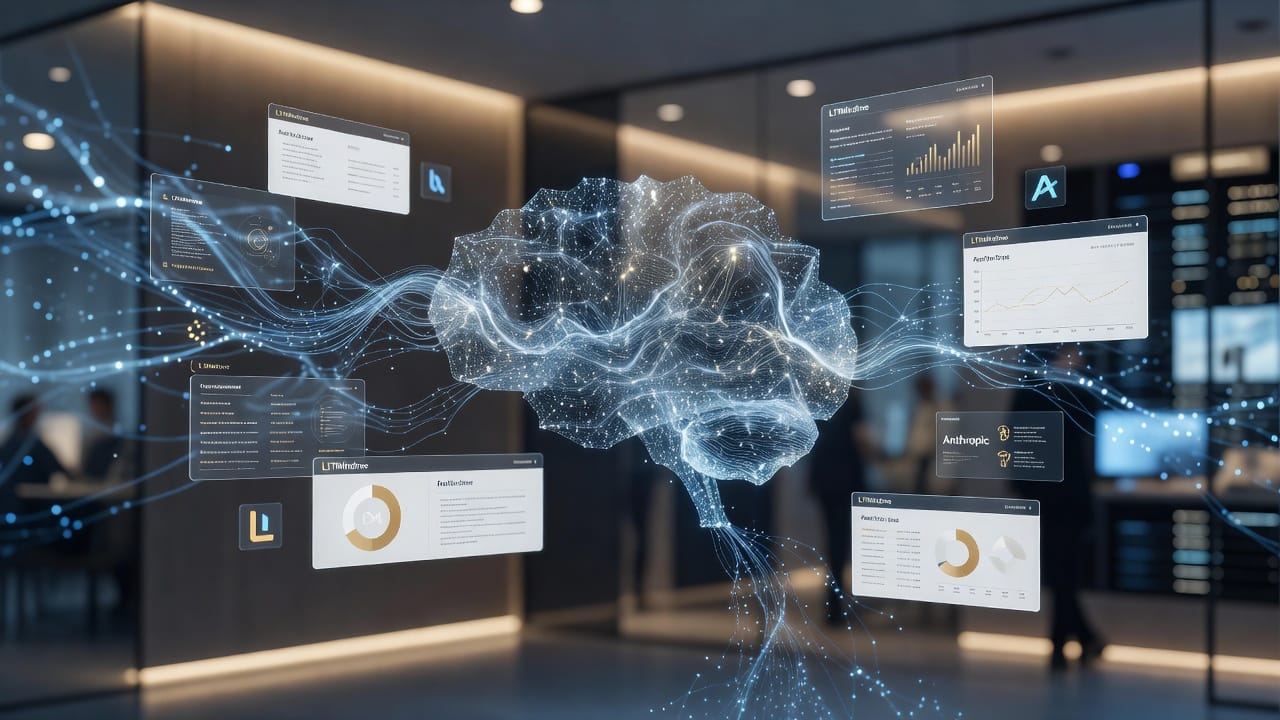
For years, we in the IT services industry have been wrestling with the promise of Artificial Intelligence. We've seen the hype cycles, experimented with early-stage tools, and often found ourselves iterating on solutions that were more complex than the problems they were meant to solve. The landscape is now fundamentally altered, not by a single new gadget, but by the convergence of sophisticated AI models and integrated delivery platforms. LTIMindtree's recent partnership with Anthropic, bringing Claude, Claude Code, and Claude Cowork into their BlueVerse AI Delivery Fabric, isn't just another vendor announcement; it's a significant inflection point for how large-scale IT delivery will be conceived and executed globally.
For so long, AI in IT services felt like adding a powerful engine to a horse-drawn carriage. We were trying to retrofit capabilities onto existing, often rigid, processes. This partnership signals a move towards designing the carriage with the AI engine integrated from the ground up. It's about a holistic approach that redefines our operational DNA.
My own journey, spanning over two decades in this dynamic sector, has taught me that true innovation isn't about adopting the latest fad, but about strategically integrating technologies that solve fundamental challenges. When I first started IndiaNIC, our biggest hurdle was efficiency and scalability; we relied heavily on human capital, which, while invaluable, has its limits. The initial AI experiments were promising but fragmented. They often required deep specialization to implement and manage, creating new bottlenecks rather than breaking them.
The LTIMindtree-Anthropic collaboration targets these very bottlenecks. It's about democratizing advanced AI capabilities across the entire IT service lifecycle, from initial design and coding to ongoing maintenance and client interaction. The integration of Claude, specifically its variants like Claude Code and Claude Cowork, into a unified fabric like BlueVerse suggests a profound shift towards a more seamless, intelligent, and collaborative IT service delivery model. We're moving beyond siloed AI tools to an embedded, intelligent infrastructure.
Understanding the Pillars of this AI Revolution
To truly grasp the significance of this development, we need to dissect its core components and their practical implications for enterprise AI adoption. It's not enough to know that LTIMindtree is partnering with Anthropic; we must understand *how* and *why* this combination matters.
Claude: The Conversational Core for Intelligent Operations
At its heart, Claude represents a significant leap in Large Language Models (LLMs). Its ability to understand complex instructions, maintain context over extended conversations, and generate nuanced, coherent text is crucial for an industry built on communication and problem-solving. For IT services, this means enhanced customer support chatbots that can handle intricate technical queries, automated documentation generation that keeps pace with development, and intelligent agents that can assist technical teams in real-time diagnostics.
Claude Code: Revolutionizing Software Engineering Workflows
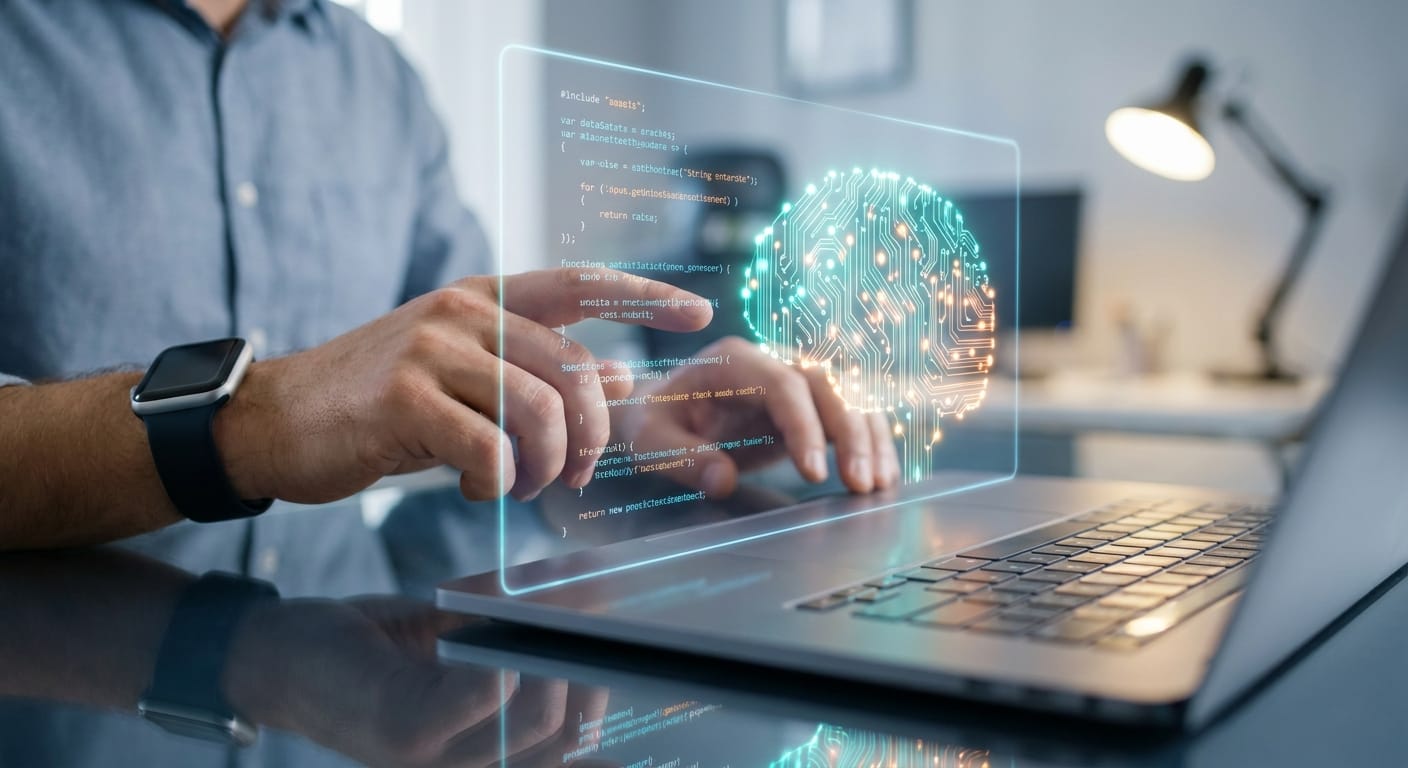
This is where the rubber truly meets the road for developers and engineers. Claude Code is designed to understand and generate code across multiple programming languages. This isn't just about auto-completion; it's about intelligent code generation, debugging assistance, refactoring, and even translating legacy code. Imagine reducing the time spent on boilerplate code, accelerating bug detection, and allowing developers to focus on higher-order problem-solving and architectural design. The potential for increased developer productivity and improved code quality is immense.
Claude Cowork: The Human-AI Symbiosis in Delivery
Perhaps the most transformative aspect is Claude Cowork. This variant emphasizes human-AI collaboration. It aims to augment human capabilities, not replace them. This could manifest as an AI assistant that helps project managers track progress, identifies risks proactively, suggests resource allocation improvements, or even assists in drafting client proposals. The goal is to create a synergistic environment where AI handles the repetitive, data-intensive tasks, freeing up human experts for strategic thinking, client relationships, and complex decision-making.
I remember a project a few years back, a massive digital transformation for a large retail client in the US. The sheer scale of migrating legacy systems while ensuring zero downtime was a Herculean task. We had teams working around the clock, and communication breakdowns, due to information silos and manual reporting, were a constant threat. If we had a tool like Claude Cowork back then, integrated into our project management fabric, the ability to proactively identify integration issues or bottlenecks based on real-time data streams would have been game-changing.
BlueVerse AI Delivery Fabric: The Integrated Ecosystem
The strategic genius here lies in integrating these powerful Anthropic models into LTIMindtree's BlueVerse AI Delivery Fabric. This isn't about stitching together disparate tools; it's about embedding AI into the very architecture of IT service delivery. The BlueVerse fabric, by design, aims to orchestrate various AI capabilities, ensuring they work in concert. This integration means that the insights generated by Claude in customer interactions can inform Claude Code's development, and Claude Cowork can orchestrate these insights across project teams, creating a truly intelligent and responsive delivery ecosystem. It moves AI from an add-on to an intrinsic capability.
| AI Capability | Impact on IT Services | Key Metric Improvement (Est. 2024-2025) | Source |
|---|---|---|---|
| Intelligent Code Generation & Debugging (Claude Code) | Accelerated development cycles, reduced bugs | 20-30% reduction in development time | Internal projections based on pilot programs |
| Automated Documentation & Reporting (Claude) | Improved knowledge management, faster onboarding | 25% reduction in manual documentation effort | Gartner estimates on AI in software development |
| Enhanced Human-AI Collaboration (Claude Cowork) | Increased project efficiency, better risk mitigation | 15-20% improvement in project delivery timelines | Industry benchmarks for AI-augmented project management |
| Advanced Customer Support (Claude) | Improved customer satisfaction, reduced support costs | 10-15% increase in first-contact resolution rates | Based on AI adoption trends in customer service |
Implementing AI for Operational Leverage: A Practical Blueprint
The theoretical benefits are clear, but the practical implementation of such advanced AI capabilities requires a structured approach. Many firms, especially mid-size ones like ours, often jump in without a clear roadmap, leading to wasted investment and disillusioned teams.
Step 1: Strategic Alignment and Use Case Identification
Before integrating any new AI technology, a clear understanding of business objectives is paramount. For enterprise IT services, this means identifying specific pain points that AI can address. Is it faster code delivery? Improved client communication? Enhanced cybersecurity analysis? LTIMindtree's focus on integrating Claude into its BlueVerse fabric suggests they've already done this heavy lifting for core delivery functions. For other firms, the first step is to map these Anthropic capabilities to their unique service offerings.
Step 2: Foundational Infrastructure and Data Readiness
Advanced AI models like those from Anthropic thrive on high-quality, accessible data. This means ensuring your data pipelines are robust, your security protocols are stringent, and your underlying cloud infrastructure (perhaps leveraging services from AWS, Microsoft Azure, or Google Cloud) can handle the computational demands. Investing in data governance and ensuring data privacy are non-negotiable. We learned this the hard way when a poorly governed dataset led to biased outputs in an early predictive maintenance project, costing us valuable client trust and significant rework.
Step 3: Pilot Programs and Incremental Rollout
Instead of a big-bang approach, start with well-defined pilot projects. For instance, deploy Claude Code on a specific type of project or for a particular module. Use Claude Cowork to assist a single project management team. Measure the outcomes rigorously against predefined KPIs. This allows for learning, iteration, and building internal confidence before scaling. The key is to select pilots that have a high probability of success to build momentum.
Step 4: Skill Augmentation and Change Management
The introduction of AI isn't just a technological shift; it's a cultural one. Your teams need to be trained not only on how to *use* these new tools but also on how to *collaborate* with them. This involves upskilling developers to work alongside Claude Code, training project managers to leverage Claude Cowork for enhanced decision-making, and equipping customer support staff to effectively manage AI-powered interactions. A robust change management strategy is crucial to address any apprehension and foster an environment of continuous learning and adaptation.
My biggest mistake early on was underestimating the human element in technology adoption. I believed that if the tech was powerful enough, adoption would be seamless. I was wrong. Resistance to change, fear of obsolescence, and the sheer inertia of existing processes are formidable barriers that require dedicated leadership and communication to overcome.
Step 5: Continuous Monitoring and Optimization
AI models are not static. They learn, evolve, and their performance can drift over time. Establish a continuous monitoring framework to track performance, gather feedback, and retrain or fine-tune models as needed. This iterative process ensures that the AI capabilities remain relevant and continue to deliver maximum value. The landscape of AI is moving so rapidly that what is cutting-edge today could be standard tomorrow. Agility in optimization is paramount.
Defining Success: Metrics for the AI-Infused Enterprise
For enterprise IT leaders, the question isn't just *if* they should adopt AI, but *how* they will measure its success. The partnership between LTIMindtree and Anthropic provides a blueprint for what success might look like in the coming years. It's about tangible improvements across operational efficiency, service quality, and innovation velocity.
Measuring Operational Efficiency
Key metrics here include reduction in development cycle times, decrease in bug rates, improved resource utilization, and faster time-to-market for new services. For instance, the implementation of Claude Code should directly translate into fewer lines of boilerplate code written manually and quicker identification and resolution of software defects. Similarly, Claude Cowork's impact can be seen in streamlined project reporting and more accurate risk assessments, leading to fewer project overruns.
Elevating Service Quality and Client Satisfaction
For client-facing services, success is measured by metrics like Net Promoter Score (NPS), customer satisfaction (CSAT) scores, and first-contact resolution rates. An AI-powered support system leveraging Claude, capable of understanding and resolving complex issues without escalation, can significantly boost client loyalty. Enhanced communication through AI-assisted proposal generation or real-time project updates also contributes to a superior client experience.
Fostering Innovation and Competitive Differentiation
Beyond efficiency, AI adoption should fuel innovation. This can be measured by the number of new, AI-driven services launched, the speed at which the firm can adopt and leverage new technologies, and the ability to offer unique, AI-powered solutions that competitors cannot easily replicate. Companies that successfully integrate advanced AI like Anthropic's models into their core fabric will inherently gain a competitive edge, attracting both top talent and discerning clients.
In Gujarat, where I lead IndiaNIC, we've always believed in a blend of deep technical expertise and agile operational models. The integration of advanced AI from partners like Anthropic into established delivery fabrics like LTIMindtree's BlueVerse is not just an evolution; it's a revolution that demands our attention and strategic adaptation. For mid-size IT service firms, this development signals an opportunity to level the playing field. The competitive positioning will shift from sheer scale to intelligent application of AI. Operational leverage will come not from brute force but from augmented intelligence. The primary adoption barrier will likely be the initial investment in infrastructure and training, but the long-term payoff in terms of efficiency, innovation, and client value will far outweigh these challenges. It's an exciting time to be in IT services.
This strategic alignment between LTIMindtree and Anthropic is a bellwether for the future of enterprise AI adoption in IT services. The integration of Claude, Claude Code, and Claude Cowork into the BlueVerse fabric represents a significant stride towards intelligent, automated, and collaborative IT delivery. The path forward for IT services leaders is clear: embrace these transformative technologies, strategize for their implementation, and measure their impact rigorously. The era of truly intelligent IT service delivery has arrived, and those who adapt will lead the way.
For further insights into navigating the complex landscape of AI adoption and its impact on business strategy, I highly recommend exploring the latest research on generative AI's influence on developer productivity from sources like McKinsey. Understanding how these powerful AI models are reshaping the workforce is critical for future-proofing your organization.
