



In today's rapidly evolving digital landscape, the tools we once relied on to connect with our audiences are beginning to show their age. As Director of Global Sales at IndiaNIC, I've witnessed firsthand the immense power of digital strategies. However, I've also observed a significant shift - the slow, yet undeniable, decline of traditional marketing SaaS. The rigid automation, limited personalization, and disconnected data silos inherent in these platforms are no longer sufficient for the dynamic, non-linear customer journeys we navigate today.
For years, we've operated under the premise of pre-defined workflows and segmented audiences. Marketing automation was meant to streamline processes, but often, it ended up creating more friction. We'd set up intricate sequences, only to realize they didn't account for the myriad of ways a customer might interact with our brand across different channels and touchpoints. This is where the next evolution steps in: AI-native automation.
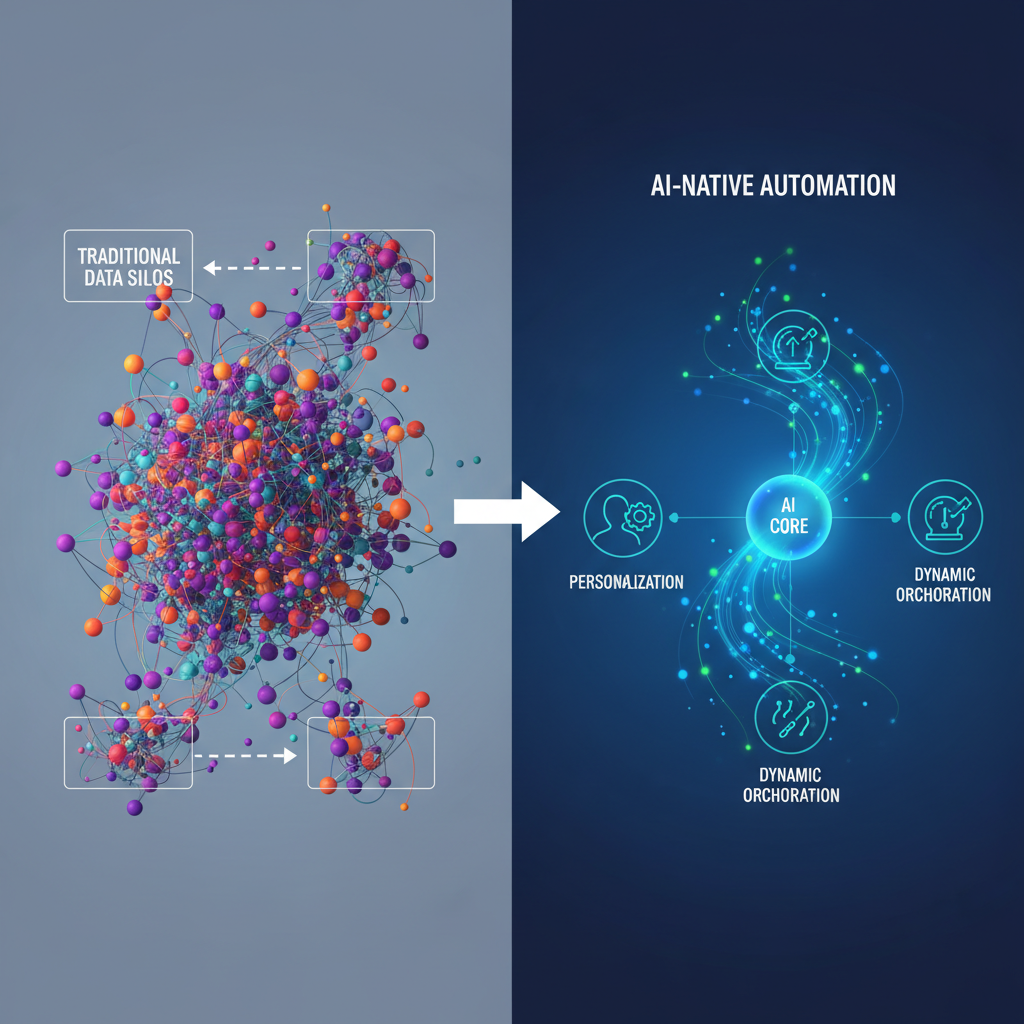
This isn't just a buzzword; it's a fundamental paradigm shift. AI-native automation leverages intelligent, predictive agents that move beyond simple if-then scenarios. These agents are capable of dynamically orchestrating entire marketing campaigns, anticipating engagement patterns, and delivering genuine one-to-one personalization at a scale previously unimaginable.
The Cracks in Traditional Marketing SaaS
The foundational issue with many legacy marketing SaaS solutions lies in their architectural design. They were built for a simpler era of marketing, one where customer journeys were more predictable and channels were fewer. This has led to several critical pain points that are increasingly hindering effective engagement:
1. Rigid Automation That Ignores Nuance
Traditional automation platforms often operate on a linear model. A customer takes action A, so trigger sequence B. While this can be effective for basic lead nurturing, it fails to account for the complexity of modern customer behavior. Customers might interact with content on social media, then visit your website indirectly, and then engage with an email. A rigid system struggles to adapt to these non-linear paths.
2. Limited Personalization at Scale
True personalization is more than just inserting a customer's name into an email. It's about understanding their current needs, preferences, and context, and delivering relevant messaging at the precise moment they are receptive. Legacy systems often rely on static segmentation, which can lead to generic content that misses the mark. Scaling true personalization across a vast customer base has remained an elusive goal.
3. Data Silos That Obstruct Vision
Perhaps the most significant failing is the persistent issue of data silos. Information about customer interactions often resides in disparate systems - CRM, email marketing, social media analytics, website analytics, and more. These silos prevent a unified view of the customer, making it impossible to connect the dots and understand the complete journey. Without a holistic data picture, personalization efforts are hampered, and automation becomes less effective.
The future of marketing isn't about automating tasks; it's about intelligently orchestrating experiences.
The Dawn of AI-Native Automation
AI-native automation represents a fundamental leap forward, addressing the shortcomings of traditional systems head-on. Instead of pre-programmed rules, we're talking about systems that learn, adapt, and predict. This is powered by sophisticated artificial intelligence and machine learning algorithms, enabling a more dynamic and responsive approach to marketing.
Intelligent, Predictive Agents: Beyond Basic Workflows
Imagine marketing agents that don't just follow instructions but understand intent. These agents can:
- Analyze vast datasets to identify patterns in customer behavior that humans might miss.
- Predict the next likely action a customer will take based on their historical interactions and external factors.
- Dynamically adjust campaign elements in real-time based on these predictions.
- Orchestrate complex, multi-channel campaigns with an understanding of which message, on which channel, at what time, will resonate most effectively.
This level of intelligence allows us to move beyond simply automating tasks to truly orchestrating customer experiences. It's the difference between sending a pre-written email sequence and having a system that understands a customer is showing interest in a specific product and proactively delivers tailored content about it across their preferred channels.
Adaptive Campaigns: Learning and Reacting in Real-Time
The concept of adaptive campaigns is central to AI-native automation. These campaigns are not static; they are living entities that learn and evolve with every customer interaction. For instance, if a particular ad creative isn't performing as expected, an AI-native system can instantly detect this and pivot to an alternative, or even dynamically adjust the targeting parameters. This real-time reaction is crucial for optimizing performance and ensuring resources are allocated effectively.
At IndiaNIC, we've been exploring how these advanced AI capabilities can be integrated into bespoke digital solutions. We've seen clients struggling with outdated marketing stacks, experiencing plateaued growth, and feeling disconnected from their customers. The shift to AI-native is not just a technological upgrade; it's a strategic imperative.
A Micro-Story from My Experience
Some 15 years ago, when I was deeply involved in developing e-commerce platforms, we faced a common challenge: cart abandonment. We implemented basic abandoned cart emails, which saw some success. However, there was always a gap. Some customers abandoned carts due to price, others due to shipping concerns, and some simply got distracted. We were sending the same generic follow-up to everyone. It took years of refining rules and segmenting our audience manually to see marginal improvements. If we had the AI-native capabilities we have today, we could have built an agent that not only detected abandonment but analyzed the customer's browsing history to infer the reason for abandonment and send a truly personalized, contextually relevant recovery message - perhaps a discount for a price-sensitive user or information about faster shipping options for someone concerned about delivery times. That's the power of intelligent orchestration.
The Necessity for Competitive Marketing
In today's hyper-competitive market, failing to adapt means falling behind. The modern consumer expects personalized experiences. They are inundated with information and have a very low tolerance for irrelevant content. AI-native automation is no longer a nice-to-have; it's a fundamental necessity for any brand looking to thrive.
Key Benefits of Embracing AI-Native Automation
- Enhanced Customer Engagement: Delivering relevant content at the right time builds stronger relationships.
- Improved Conversion Rates: Personalized experiences lead to higher conversion rates across the funnel.
- Increased Efficiency: Automating complex tasks frees up marketing teams to focus on strategy and creativity.
- Deeper Customer Insights: Unified data and AI analysis provide unparalleled understanding of customer behavior.
- Competitive Advantage: Brands leveraging AI-native automation can outmaneuver competitors by offering superior customer experiences.
The landscape is shifting, and the tools of yesterday simply won't cut it. Companies like Salesforce, Adobe, and Microsoft are all investing heavily in AI capabilities within their marketing clouds, recognizing this profound transition.
Data-Driven Insights: The Impact of Personalization
The impact of personalized marketing is well-documented. Research consistently shows a significant uplift in key performance indicators when personalization is effectively implemented.
| Metric | Traditional Marketing | AI-Native Personalized Marketing |
|---|---|---|
| Conversion Rates | +5-10% | +20-30% (according to Forrester research) |
| Customer Engagement | Moderate | High (anticipates needs) |
| Data Utilization | Fragmented (silos) | Unified and actionable |
| Marketing ROI | Standard | Significantly Higher (optimized spend) |
The Path Forward: What Brands Need to Do
The transition to AI-native automation requires a strategic approach. It's not about simply adopting a new tool; it's about rethinking our marketing philosophy. Here are some actionable steps brands can take:
- Audit Your Current Stack: Identify the limitations of your existing marketing SaaS. Where are the pain points in terms of automation, personalization, and data integration?
- Prioritize Data Unification: Invest in solutions that break down data silos and create a single, unified customer view. This is the bedrock of effective AI.
- Explore AI-Native Platforms: Research and pilot AI-native marketing solutions that offer intelligent agents and adaptive campaign capabilities. Consider vendors that specialize in AI-driven marketing or those integrating advanced AI into their existing offerings.
- Invest in Skills: Ensure your marketing teams have the necessary skills to leverage AI-powered tools effectively, focusing on strategy, data analysis, and creative output.
- Embrace Experimentation: AI-native automation thrives on data and iteration. Foster a culture of experimentation and continuous learning within your marketing department.
Companies like Google with its AI advancements, and platforms like HubSpot are continually pushing the boundaries of what's possible. Embracing these shifts is no longer optional.
Conclusion: Future-Proofing Your Marketing Strategy
The decline of traditional marketing SaaS is a clear signal that the industry is moving towards a more intelligent, adaptive, and customer-centric future. AI-native automation is not a distant possibility; it is the present reality that will define success in the coming years. By understanding the limitations of older systems and embracing the power of intelligent agents and adaptive campaigns, brands can forge deeper connections with their audiences, drive unparalleled growth, and secure a competitive edge in an ever-changing market.
It's time to move beyond rigid workflows and embrace the dynamic intelligence that AI offers. The future of marketing is here, and it's intelligent.


